
When to Go to ER for Hives?
Hives are often mild and clear within a day, but they can sometimes occur as part of a serious allergic reaction. The key question is whether you have hives alone or hives with symptoms such as trouble breathing, throat swelling, dizziness, vomiting, or fainting. These symptoms need emergency care.
Patients might come into our office each day looking for assistance with an allergic reaction at Top Care Emergency Room in Houston. You should be aware of the symptoms of true emergencies if you are suffering from hives or if someone you love is.
What Are Hives?
Hives, also called urticaria, are raised, itchy welts that can appear anywhere on the skin. They may be red, pink, skin-colored, or harder to see on darker skin. Individual hives often fade within 24 hours, although new ones can appear as others disappear.
- Food allergies, such as to peanuts, shellfish, eggs
- Medications
- Insect stings or bites
- Allergens (such as pollen, animal dander and latex)
- Stress or anxiety
- Temperature extremes (hot or cold)
- Infections or illness
Typically, hives last less than 24 hours and they don’t require medical attention. But not all reactions are mild and some can become life-threatening.
When to Go to ER for Hives
If you have hives with any of the following symptoms, emergency medical attention like ER for hives should be sought immediately:
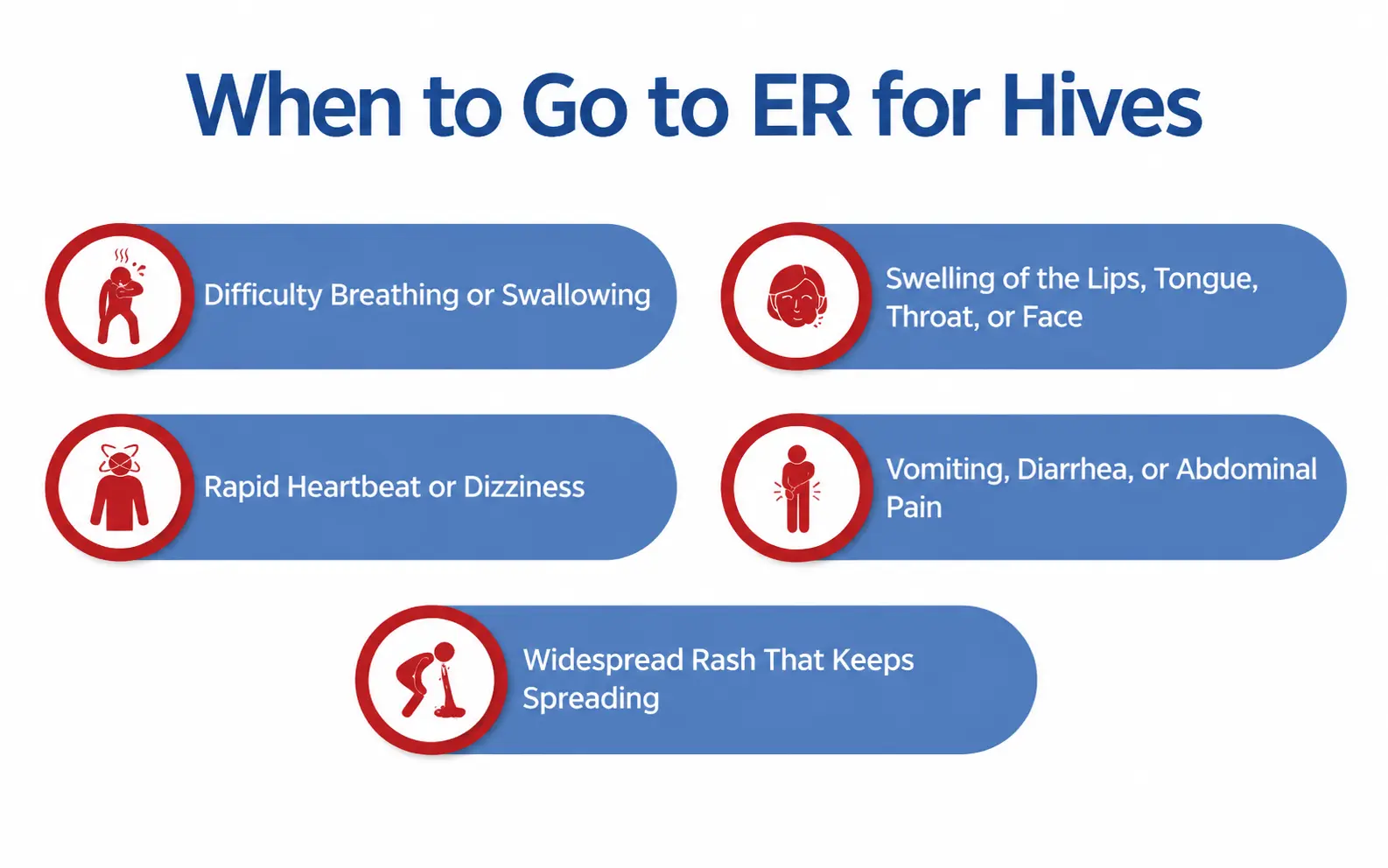
Difficulty Breathing or Swallowing
If you’re struggling to breathe, feel tightness in your chest or are having trouble swallowing, this may be a sign of anaphylaxis, a severe allergic reaction that requires emergency treatment.
Swelling of the Lips, Tongue, Throat or Face
When they swell, they can obstruct your breathing. It may get worse quickly even if it is just starting to swell. Don’t wait, go to the ER for hives.
Racing Heart or Dizziness
Tightness in the chest or a feeling of discomfort, lightheadedness, weakness or fainting? These are some of the signs that could indicate a drop in blood pressure, which is another sign of anaphylaxis.
Vomiting, Diarrhea or Stomach Pain
If stomach symptoms are in addition to the hives, it might be a systemic reaction. This may be a sign of a more severe allergic reaction, you immediately should go to the ER for hives.
A Rash That Won’t Stop Spreading
If your hives are getting worse, increasing in size or covering most of your body, you should go to the ER, particularly if the antihistamines you are taking are not helping.
Hives All Over Your Body: When Is It an Emergency?
Hives all over your body do not always mean you need the ER. If you only have itchy welts and feel otherwise well, the reaction may be mild. But widespread hives need emergency care when they occur with:
- Trouble breathing or wheezing
- Swelling of the lips, tongue, mouth, or throat
- Dizziness, fainting, or weakness
- Vomiting or diarrhea
- A fast or weak pulse
- Rapid worsening of symptoms
These can be signs of anaphylaxis, a life-threatening allergic reaction.
Signs of Anaphylaxis to Watch For
Anaphylaxis is a severe allergic reaction that can become life-threatening quickly. Hives may be one of the first signs, especially when they occur along with other symptoms.
Call 911 and use an epinephrine auto-injector if prescribed when a severe allergic reaction causes:
- Trouble breathing or wheezing
- Swelling of the tongue or throat
- A weak or rapid pulse
- Dizziness or fainting
- Vomiting or diarrhea
- Severe weakness or confusion
Do not wait to see if these symptoms go away. Epinephrine is the first-line treatment for anaphylaxis. Even if symptoms improve after epinephrine, emergency evaluation is still needed because symptoms can return.
Urgent Care or ER for Hives: Where Should You Go?
The right choice depends on your symptoms.
Urgent care may be appropriate when you have hives but:
- You can breathe and swallow normally
- There is no swelling of your tongue or throat
- You have no dizziness or fainting
- Symptoms are not rapidly getting worse
- The hives are not improving with usual home care
Go to the ER or call 911 if hives occur with trouble breathing, throat or tongue swelling, dizziness, fainting, vomiting, diarrhea, or other signs of anaphylaxis.
What Will Urgent Care Do for Hives?
Urgent care can evaluate mild to moderate hives and look for signs of a more serious allergic reaction. Treatment may include an antihistamine or other medicine based on your symptoms and medical history.
Hive Urgent care is a reasonable option when the hives are not rapidly worsening and you have no breathing problems, throat swelling, fainting, or other signs of anaphylaxis.
If those symptoms are present, go to the ER instead.
How Long Do Hives Usually Last?
Individual hives often disappear within 24 hours, but new welts can appear as older ones fade. This can make a flare seem like it is lasting longer.
Mild hives may clear on their own. If hives continue for more than a few days, keep coming back, or become severe, contact a healthcare professional for evaluation.
What Can You Do for Mild Hives at Home?
If you have mild hives without emergency symptoms:
- Avoid a known trigger if possible.
- Use a cool compress on itchy areas.
- Take a cool shower or bath.
- Avoid scratching and tight clothing.
- An antihistamine may reduce itching and hives when used as directed.
If symptoms worsen or you develop breathing problems, swelling of the throat or tongue, dizziness, or fainting, seek emergency care.
What Will the ER Do for Hives or an Allergic Reaction?
The ER will first check for signs of a serious allergic reaction, including problems with breathing, blood pressure, and swelling.
Treatment depends on the severity of the reaction. It may include:
- Antihistamines for hives and itching
- Epinephrine for anaphylaxis
- IV fluids when needed
- Oxygen or breathing support when needed
- Other medicines based on your symptoms
For severe allergic reactions, epinephrine is the key emergency treatment.
What to Do While You Wait for Emergency Help
If you’re experiencing a severe allergic reaction while waiting for emergency help:
- Use an epinephrine auto-injector (if prescribed).
- Lie down and elevate your legs to help blood flow.
- Avoid any known allergies that may have triggered the reaction.
- Stay calm and don’t delay heading to the ER.
Do not leave someone with symptoms to their own devices and check their breathing and consciousness until help arrives. from ER for hives.
When Should You See a Doctor for Hives?
See a healthcare professional if your hives:
- Continue for more than a few days
- Keep coming back
- Are severe or difficult to control
- Started after a new medication
- Occur often without a clear trigger
You may need an evaluation to look for possible triggers or another cause.
How to Prevent Future Hives and Allergic Reactions
The only way to not get hives is to avoid the triggers, not always easy. The following are a few steps that you could take:
- An allergist can help identify what’s causing your reactions.
- If you’ve had a serious reaction before, you should carry an epinephrine injector at all times.
- Read food and medication labels carefully.
- Wear a medical alert bracelet if you have known allergies.
- Keep a symptom journal to identify patterns or hidden triggers.
When in Doubt, Don’t Wait To Go ER for hives
Your safety and wellbeing should always come first. If hives become severe, spread quickly or are paired with breathing difficulty, swelling or dizziness, it may be time to seek emergency care immediately. For Allergy urgent care needs, our team is equipped to handle both mild and severe allergic reactions. When symptoms feel serious, trust your instincts and consider a quick ER evaluation.
At Top Care Emergency Room, we provide fast and compassionate emergency treatment 24/7 with no appointment required. Patients from Greater Heights, Montrose and Washington Avenue can walk in anytime for immediate medical attention and personalized care.
Visit Top Care ER for hives When in Doubt
If you are unsure whether your hives or allergic reaction requires emergency treatment, it is always safer to get evaluated early. Allergic symptoms can worsen rapidly and what begins as a mild rash may quickly turn into a medical emergency.
Our experienced emergency physician at Top Care Emergency Room are equipped to treat allergic emergencies around the clock with little to no wait time. Patients searching for emergency care in River Oaks, Oak Forest or Spring Branch can conveniently access locations near you for rapid treatment. For immediate help, you can also check in now and receive expert emergency care without an appointment.
