

Is Back Pain a Sign of Heart Attack?
The relationship between back pain and heart attacks is a topic that raises concerns for many. While back pain is often attributed to muscle strain or other common causes, it can occasionally serve as a potential indicator of underlying cardiovascular issues.
This brief article explores is back pain is a sign of a heart attack, emphasizing the importance of understanding associated heart attack symptoms and seeking timely medical attention for a comprehensive evaluation. For severe symptoms, chest pain emergency care is available.
Can Back Pain Be a Sign of a Heart Attack?
While back pain is commonly attributed to muscle strain, it can, in certain instances, signal a potential heart attack. Especially in cases of upper back pain between the shoulder blades, there may be a connection to cardiovascular issues.
It’s crucial to recognize that not all back pain indicates a heart attack, and the presence of additional symptoms such as chest discomfort, shortness of breath, or sweating is key. If there are concerns about back pain and its potential link to heart health, seeking prompt medical attention is essential for a thorough evaluation and guidance.
Where Is Back Pain Located During a Heart Attack?
Heart attack-related back pain involves pain across the middle or upper back. It can radiate to the shoulders and arms, the neck or jaw, and the chest. Rarely, a heart attack can cause lower back pain, but heart attack symptoms can vary from person to person.
Back pain, in and of itself, should not be confused with a heart attack. Sudden or unexplained back pain is more concerning when coupled with chest pressure, pain with deep breaths, sweating, nausea, lightheadedness, dizziness, or extreme weakness.
What Does Back Pain From a Heart Attack Feel Like?
Heart attack-related back pain can feel like a pressure, heaviness, squeezing or aching pain that is deep and can be uncomfortable. The pain can radiate into the chest, shoulders, arms, neck or jaw.
The symptoms mentioned that are scary to have are a sudden onset, shortness of breath, sweating, nausea and then feeling dizzy, being unusually fatigued with aches and pains in your chest. Pain can also come and go.
Is Upper Back Pain Between the Shoulder Blades a Sign of a Heart Attack?
Yes, upper back pain between the shoulder blades can occur during a heart attack. However, this is usually a less common cause of upper back pain. Upper back pain is almost always due to muscle strains, poor posture, or even more significant medical issues with the spine.
It becomes particularly concerning if the pain is sudden or occurs alongside chest pain or discomfort, shortness of breath, sweating, nausea, lightheadedness, or pain that radiates to the arm, neck, or jaw.
Can Lower Back Pain Be a Sign of a Heart Attack?
Lower back pain is less typical for heart attacks, but some people have heart attacks with back pain and no chest pain. Heart attacks present differently for everyone.
Sudden or unexplained lower back pain that is accompanied by chest pressure, shortness of breath, sweating, nausea, lightheadedness, or weakness, requires an immediate assessment.
Back Pain and Heart Attack Symptoms in Women
Women have more subtle symptoms of Heart attacks. These include pain in the back or upper back, shortness of breath, nausea, fatigue, sweating, dizziness, pain in the neck, shoulder, arm and jaw.
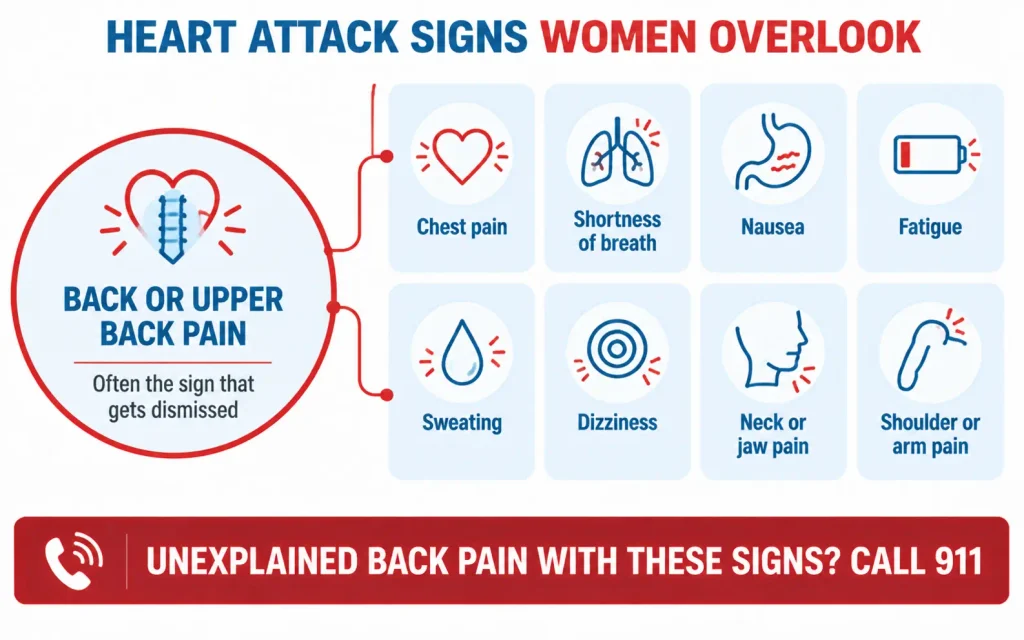
Chest pain associated with a heart attack is still common in women. You should see a doctor if you experience unexplained back pain along with other heart attack symptoms.
When Back Pain and Chest Pain Happen Together
Chest pain that radiates into the back should be taken more seriously than back pain on its own. Back pain associated with chest pressure or discomfort can be caused by a heart attack. Back, neck, shoulders, arm and jaw pain are all connected.
Call 911 (or your local emergency service) if you have sudden chest or back pain with shortness of breath, excessive sweating, nausea, feeling weak, dizzy or any other combination of these symptoms.
Recognizing the Signs of A Heart Attack
While we’re familiar with chest pain as a classic heart attack symptom, back pain might also serve as a warning. Early recognition of these signs is paramount for swift intervention in a potential heart emergency.
Back pain associated with a heart emergency may present as discomfort between the shoulder blades or even lower back pain. These symptoms, when coupled with other warning signs like shortness of breath or dizziness, should not be taken lightly. Timely awareness can be the key to effective emergency care.
Understanding Cardiac-Related Back Pain
Certain heart conditions may manifest as back pain due to the intricate nerve network in the heart. It’s crucial to comprehend this connection for prompt action in case of a potential heart emergency.
When the heart is under threat of some problem, it can send signals of distress that manifest as pain in unexpected areas, including the back. The nerve pathways from the heart can cause referred pain, making it imperative to understand the nuances of cardiac-related back pain.
How to Tell if Back Pain May Be Heart-Related
If back pain changes with movement, position, pressure, or lifting, then it is likely muscle or spine related. This pain is also related to straining from physical activity, exercise, or other physical activities.
Heart pain may occur with or without chest pressure, and may also occur along with shortness of breath, sweating, dizziness, nausea, and pain that radiates to the arms, neck, jaw, and chest.
The symptoms, as mentioned, may occur for a variety of reasons. Sudden, severe, or unexplained symptoms may also warrant a visit to the doctor.
What Causes a Heart Attack?
A heart attack occurs when blood flow to part of the heart is either completely or nearly completely blocked. The primary cause is coronary artery disease, where buildup of plaque and clots in the coronary arteries can occur, and eventually block blood flow.
Some risk factors include smoking, having high blood pressure or high cholesterol, having diabetes or being obese, and lacking exercise and having a family history of heart disease.
When to Seek Emergency Care for Back Pain
Back pain which could be a symptom of a heart attack must be regarded as an emergency. Call 911 or your local emergency number for sudden and unexplained back pain with chest pressure, shortness of breath, sweating, nausea, dizzy spells and fainting, neck, arm, jaw, and/or shoulder pain.
Do not take chances and wait to see if the symptoms go away. Heart attacks may start with very mild symptoms. The sooner heart attacks are treated, the less damage to the heart.
Final Thoughts
Empowering ourselves with the knowledge of how back pain could signal a heart emergency allows us to prioritize proactive healthcare. Whether it’s chest discomfort or back pain, actively listening to our bodies and seeking immediate medical attention at the emergency room can make a significant difference. Your heart health deserves the utmost care and attention.
Remember, being proactive about your health and seeking immediate emergency care can be life-saving. Prioritizing your well-being and recognizing the significance of timely medical attention is a crucial step in safeguarding your heart health.
In the pursuit of overall well-being, staying vigilant about potential cardiac symptoms and responding promptly can contribute to a healthier and more resilient heart.
