

How to Treat Tendonitis Fast and Speed Up Your Recovery
If you’re dealing with severe pain around a joint, you’re probably searching for how to treat tendonitis fast and quickly so you can get back to your normal life. The good news? Most cases improve with the right steps at the right time. The key is knowing what to do early, what to avoid and when to step things up. This guide breaks down simple, proven ways to reduce pain fast and speed up recovery, without confusing terms or unnecessary steps. For athletes and active individuals, sports injury emergency care is available for more severe cases.
What is Tendonitis in simple terms?
Tendonitis happens when the strong cord that connects your muscle to bone becomes irritated from overuse. It commonly affects areas like the shoulder, elbow, knee, heel or wrist. You may feel pain when moving the area, notice stiffness (especially in the morning) or experience mild swelling and tenderness.
Tendonitis can be acute or chronic, and nearly 33 million tendon injuries occur in the United States every year. This problem often begins after repeating the same motion over time, such as typing, lifting, running or playing sports. Tendonitis becomes more common with age because tendons lose flexibility and become more vulnerable to injury, which is why understanding tendonitis causes and treatment early makes such a difference.
What to Do in the First 48 Hours of Tendonitis
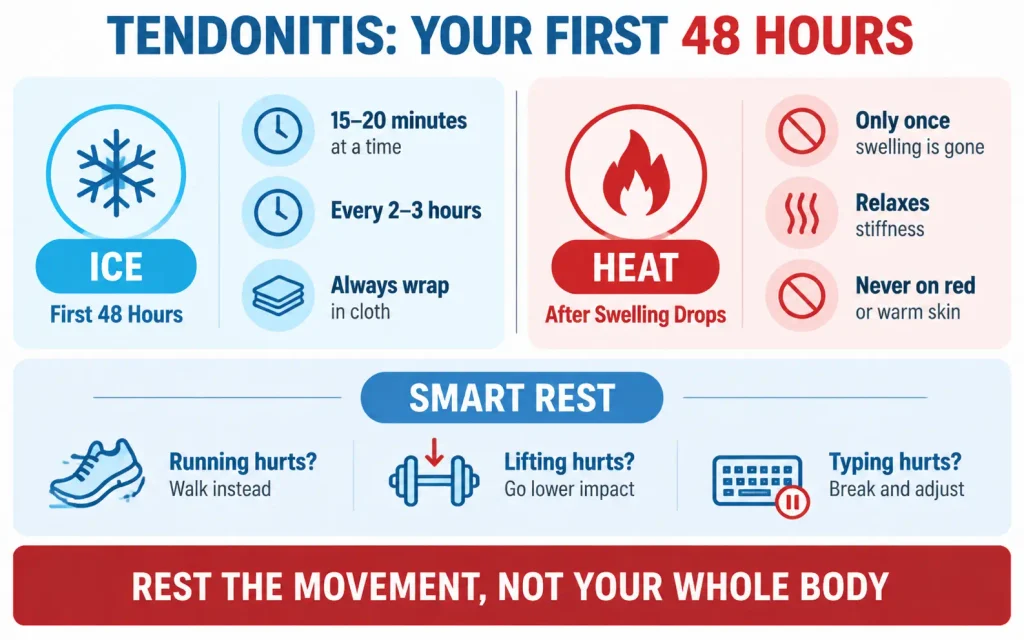
The first two days matter the most. Your goal is simply to calm things down before it gets worse. Start with these steps:
- Rest the area and avoid movements that trigger pain
- Apply ice for short sessions
- Use a light support wrap if needed
- Pause intense activity or exercise, especially activities that could lead to emergency trauma care situations
Think of this phase as damage control, where simple tendonitis home remedies like rest and ice do most of the work. The faster you reduce stress on the area, the faster healing begins.
How to Use Ice Safely for Tendonitis
Ice helps reduce pain and swelling, but it must be used correctly:
- Apply for 15–20 minutes at a time
- Repeat every 2–3 hours
- Always wrap ice in a cloth (never directly on skin)
Avoid overdoing it. Too much ice can irritate the skin without adding extra benefit.
Ice or Heat | Which One to Use and When
Ice reduces swelling and numbs pain during the first 48 hours after symptoms appear. Heat relaxes tight muscles and relieves stiffness once the swelling goes down. Never apply heat to an area that is still swollen, red, or warm to the touch. If you are uncertain about which to use, ice remains the safer choice for acute inflammation.
What Rest Really Means for Tendonitis
Rest doesn’t mean lying still all day. It means avoiding the movement that caused the problem.
For example:
- If running causes it, switch to walking, since cutting back on impact is a core part of foot tendonitis treatment.
- If lifting weights hurts, focus on a lower-impact activity.
- If typing triggers pain, take breaks and adjust your posture.
Smart rest speeds recovery. Total inactivity can actually slow things down.
Recovery After the Initial Tendonitis Symptoms
After a few days, when the pain becomes more manageable, the focus should shift from rest to gentle movement. This is where many people go wrong, because staying completely still for too long can actually increase stiffness and slow recovery.
Begin with light, pain-free movements, add slow and controlled stretching and gradually return to your normal daily activities. For example, if your elbow hurts, start with simple bending and straightening motions without forcing it.
Foods That Support Tendon Healing
Eating foods rich in vitamin C supports collagen production, which is essential for tendon strength and repair. Omega-3 fatty acids from fish, walnuts, and flaxseeds help reduce inflammation around the injured tendon. Protein from lean meats, eggs, or beans provides the building blocks needed for tissue recovery. Staying well hydrated is also critical because dehydrated tissues heal more slowly.
Best Treatments for Tendonitis
If pain doesn’t improve after a couple of weeks, it’s time to consider more structured tendonitis treatment options.
Here are the most effective ones:
- Pain relief creams or tablets for short term comfort
- Guided exercises to rebuild strength
- Hands-on therapy sessions
- Injections in stubborn cases
- Surgery (only in rare, severe situations)
Most people don’t need advanced treatments, but knowing your options helps you make better decisions.
Advanced Treatment Options for Stubborn Cases
Corticosteroid injections offer quick pain relief but are used sparingly because repeated use can weaken the tendon. Dry needling involves inserting fine needles into the tendon to stimulate blood flow and reduce pain. Shockwave therapy uses high-energy sound waves to promote healing in chronic, stubborn cases. Platelet-rich plasma therapy uses a sample of your own blood to accelerate tissue repair through concentrated healing factors. Surgery remains the last resort for tendons that have torn completely or do not respond to other treatments.
Where Physical Therapy Fits in Tendonitis Recovery
Physical therapy is one of the best treatments for tendonitis when basic care isn’t enough. A trained expert will:
- Identify the root cause
- Guide you through safe exercises
- Help rebuild strength gradually
This is not just about pain relief, it’s about fixing the problem so it doesn’t come back.
How Tendonitis Is Diagnosed at Top Care ER
A physical exam helps doctors identify the exact location and severity of tendon pain. Top Care ER uses X-rays to rule out bone spurs or arthritis that may contribute to your symptoms. Ultrasound imaging shows inflammation, fluid buildup, and small tears within the tendon tissue. MRI provides the most detailed images for complex or severe cases that do not respond to initial care. These diagnostic tools allow the experienced team at Top Care ER to create a targeted treatment plan quickly and accurately.
Preventing Tendonitis at Your Desk
Adjust your chair so your feet rest flat on the floor and your knees bend at a right angle. Position your keyboard so your wrists remain straight and your elbows stay close to your body. Keep your monitor at eye level to prevent forward neck posture and shoulder strain. Take short breaks every thirty minutes to stretch your arms, roll your shoulders, and shake out your hands. Consider using an ergonomic keyboard or vertical mouse if you already feel wrist discomfort, as the right setup also supports wrist tendonitis treatment.
Age Related Prevention Tips for Older Adults
Older adults should warm up for at least ten minutes before any physical activity to increase blood flow to the tendons. Low impact exercises like swimming, cycling, and walking protect aging tendons better than high impact activities. Light strength training with resistance bands maintains muscle support around the joints and reduces tendon load. Gentle daily stretching keeps tendons flexible and lowers the risk of sudden injury. Listen to your body carefully because pain signals should never be ignored as recovery takes longer with age.
How Long Does Tendonitis Recovery Usually Take?
How long tendonitis takes to heal depends on how early you act and how consistently you follow the right steps. Mild cases often improve within 2–3 weeks, moderate ones may take 4–6 weeks, while long-standing issues can last a few months. Recovery tends to slow down if you ignore pain, return to activity too quickly or skip strengthening exercises. In the end, staying consistent with proper care matters far more than trying to rush the process.
How to Keep Tendonitis from Coming Back
Once the pain improves, your focus should shift to preventing it from returning. Simple habits can make a big difference, like warming up before activity, increasing intensity gradually, improving your posture or movement patterns and strengthening the surrounding muscles. Most repeat issues happen when people rush back too quickly, so it’s important to take things slow and steady to allow proper healing.
When to Get Medical Help for Tendonitis
Sometimes home care isn’t enough. Watch for these warning signs of tendonitis:
- Pain lasts more than 2–3 weeks
- Pain suddenly gets worse
- You feel weakness or loss of movement
- Daily tasks become difficult
If you notice these, don’t wait. Getting help early can prevent long-term problems.
When to Go to ER for Fast Tendonitis Treatment
Speed matters when treating tendonitis, especially if pain, swelling or stiffness doesn’t ease with rest and basic care. Delaying proper treatment can slow recovery and increase discomfort. Get quick, reliable help at Top Care ER for tendon pain and start healing sooner. If symptoms become more intense or restrict movement, don’t wait contact our ER Team for immediate assistance.
At Top Care ER, our experienced providers focus on fast tendonitis treatment with care designed to reduce pain and support quicker recovery. From physical exams to advanced imaging like X-rays and ultrasound, Top Care ER has the tools and expertise to get you the right diagnosis and treatment plan without delay.
