

What Causes Tendonitis? Symptoms, Triggers And When to Go to the ER
If you’ve been dealing with ongoing joint pain in Houston, you’ve probably wondered what causes tendonitis and why it seems to come out of nowhere. In reality, it doesn’t typically occur overnight. It’s usually amassed gradually, over days, weeks and the years, due to small errors, unnoticed causes and overlooked consistent routines.
You’ll know the real causes of tendonitis in simple terms. More importantly, you’ll see how everyday actions can lead to it and what you can do to stop it from getting worse. If pain continues or limits your movement, get checked by our care team for immediate guidance and support at Top Care ER, Open 24/7.
What are Tendons?
Tendons are thick cords which join muscles to bones. The same movement repeated over time or too strong, too fast can make them irritated. This irritation gradually develops. It doesn’t necessarily hurt immediately. This is why people tend to neglect the initial symptoms until they are more uncomfortable.
Why Does Tendonitis Build Slowly?
This pain typically comes in stages, unlike sudden injuries. Initially, it might be like slight stiffness. This then becomes uncomfortable when active. After a while, it can hurt even if you are using the least amount of exertion. This is why understanding what tendonitis is and how it is treated can make it easier to recognize the condition before symptoms become more persistent.
Tendonitis Symptoms
What does tendonitis feel like?
The most common complaint is dull aching over the affected tendon that worsens with activity and improves with rest at least initially. Other symptoms of the condition may include:
- Tenderness when pressing on the tendon
- Mild swelling or warmth in the surrounding area
- A sensation of stiffness, particularly after a period of inactivity
- A cracking or cracking sensation during movement of the joint (crepitus)
- Limited strength or range of motion of the affected limb
When symptoms suggest something more serious
Sudden and intense pain, a “pop” or inability to move a joint at all may not be tendonitis, but a tendon rupture. It is an emergency situation; it requires immediate medical attention.
Hidden Causes of Tendonitis: what causes tendonitis
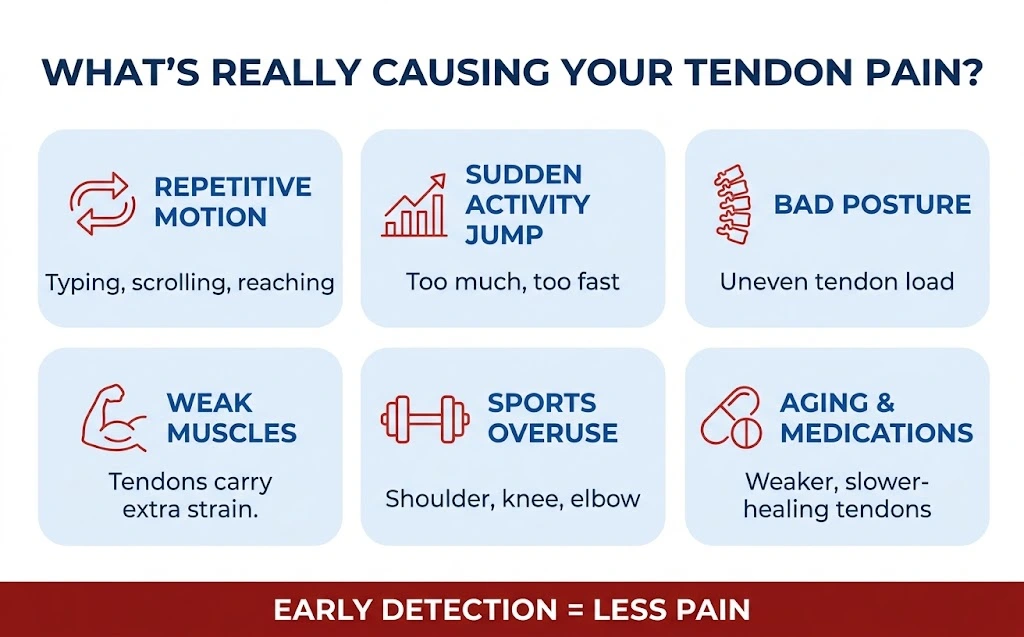
Many people don’t realize the pain starts from small daily habits, not big injuries. These hidden triggers slowly overload your body over time. Early detection means early treatment of the injury and less pain.
Repeating the Same Motion (Repetitive Strain Tendonitis)
Repeated use over time, like typing, scrolling, or reaching, puts stress on tendons. Knowing what reduces tendonitis risk starts here: this is one of the most common repetitive strain causes. Varying your movements and taking micro-breaks is the first line of defence against overuse injury.
Sudden Activity Jump
If you suddenly make a switch from a low activity level to high-intensity, your body is overcome. Your tendons are unable to adapt and are overloaded. Many people tend to commence new routines too stridently, leading to this often occurring.
Bad Posture
When people sit down improperly or form an exercise incorrectly, more stress is placed on specific areas. Even a few small things, such as slouching or lifting positions can cause harm to tissues over time and you may not notice. Bad posture could not cause any pain initially but over a period of time it places unequal pressure and more loading on the tendons.
Weak Support Muscles
Tendons carry an excessive load when surrounding muscles are weak. This imbalance contributes to stress and an increased risk of pain, particularly when involved in activity or lifting.
Repetitive Job Tasks
Repeatedly using your hands to grasp, lift or reach can cause damage to your body. With repetition of light work and effort throughout the day, even light work can cause strain and discomfort.
Motion-heavy Sports (Tendonitis Causes in Shoulder, Knee, Elbow)
Many sports such as running, cricket or weightlifting involve repetitive movements. This ongoing stress can accumulate rapidly and cause persistent pain if there is insufficient rest. The results of these activities are often tendonitis caused on your shoulder, knee and elbow. For active individuals, Houston sports injury care can help address these concerns.
Aging Effect
Tendons become less flexible and less strong as you age. This puts them at greater risk of responding to stress. Activity is good, but more cautions need to be taken for the intensity and recovery.
Slow healing Conditions (Tendonitis Symptoms and Causes)
Your body’s healing process is slowed down by some health problems. This means that even mild strains may persist longer and worsen, making for more tendonitis risk factors. The symptoms and causes of tendonitis include, but are not limited to, pain and tenderness near the joint, stiffness of the joint and pain during activity.
Medication Impact (Tendon Inflammation Triggers)
Some medications may cause tendons to become weak over time. If it begins after consumption of a new medication, then it could be a medication interaction. Be sure to look for change and discuss if necessary. Certain medications cause inflammation of the tendinous tissue to occur, as they impair tissue healing.
Everyday Habits That Hurt Your Tendons
There are many activities we do daily that put stress on our tendons without realising it. Understanding ways to protect tendons from injury means paying attention to these small but cumulative habits:
- Typing for hours without breaks
- Lifting heavy grocery bags regularly
- Using your phone with the same hand all day
- Running on hard surfaces without proper shoes
These small habits can gradually increase stress on your tendons. Making simple changes to your daily routine, activity level, and technique can help prevent tendonitis and reduce repeated strain.
Why Do Some People Get Tendonitis and Others Don’t?
Two people perform exactly the same activity and the one person alone develops tendonitis. This can seem perplexing, particularly if the effort or routine is similar.
In most cases it will be the technique, strength, recovery and other aspects of health that make the difference. Poor form, weak muscles or inadequate rest can increase the stress on tendons, increasing their chances of becoming irritated over time.
Why Does It Keep Coming Back?
This is one of the foremost causes of recurring pain, as you don’t allow your body time to heal. Although the pain goes away, that strain is not going away and may be slowly being built back up.
One of the most frequent errors people make is returning to activity too soon. Knowing what helps avoid tendonitis relapse means respecting the recovery window fully, returning to the same movement pattern before healing is complete brings back the tension and may exacerbate the problem.
Is it okay to exercise if you already have mild tendon pain?
Exercise will cause a worsening of symptoms, but light exercise may be okay. Avoid putting it under strain, making it move in a way that it doesn’t like and let it rest so healing doesn’t get put off.
When You Should Take Tendonitis Seriously
Early care can keep symptoms from becoming more difficult to manage. If pain has already started, knowing how to treat tendonitis can help you understand appropriate first steps and when medical evaluation may be needed.
- Severe or sharp pain that feels intense or starts suddenly
- Limited movement where you can’t use a joint properly
- Pain that doesn’t improve even after a few days of rest
- Sudden “pop” followed by inability to move the joint (this raises concern for tendon rupture)
Ignoring these warning signs of tendonitis can lead to long term problems that are harder to fix. The difference between tendonitis and tendon rupture is relevant here: In tendonitis, the tendon is inflamed and irritated, while in tendon rupture the tendon has partially or completely ripped and is often a very urgent condition to assess.
When to Go to ER for Tendonitis Causes and Triggers
While overuse or repetitive strain is a common factor in developing tendonitis, there are numerous unknown or hidden factors that may make you susceptible to the condition, such as bad posture, abrupt changes in activity and improper movements. If you are experiencing ongoing pain or inflammation, it’s essential to deal with it early on. Our Emergency trauma services are available for severe cases requiring immediate attention.
Get reliable care at Top Care ER for accurate evaluation and targeted relief. We offer emergency X-Ray, ultrasound and CT scan to rule out fractures, tendon tears or other urgent issues. If pain continues or limits your movement, get checked by our care team for immediate guidance and support. You can also visit our nearby locations, including Montrose ER and Greater Heights emergency care, for quick assessment and personalized care. In Houston Heights and surrounding areas, choose Top Care Emergency Room, Open 24/7/365.
At Top Care ER, our specialists are skilled in identifying the causes of tendonitis and providing focused care to relieve pain and reduce the risk of recurrence. We also provide ER treatments for stitches, broken bones and wound care. For non-emergency tendon pain evaluation, our adult urgent care services are available.
Visit Top Care ER, Open 24/7 Contact Us or click-to-call (832) 232-0500.
How to Reduce Your Risk of Tendonitis
Exploring tendon health improvement methods doesn’t require dramatic lifestyle changes, small, consistent adjustments make the biggest difference:
- Begin each session with a few minutes of gentle movement to prepare tendons for load
- Increase activity intensity gradually, never jump from low to high effort overnight
- Take short, regular breaks when performing repetitive tasks to interrupt strain accumulation
- Select appropriate footwear and equipment for your activity
- Adopt good work posture to minimise unequal stress on tendons
- Vary your daily activities, avoid repeating the same motion for extended periods
If you’re in Houston and want personalised guidance on tendonitis treatment, our team at Top Care ER can help with evaluation and next steps.
