
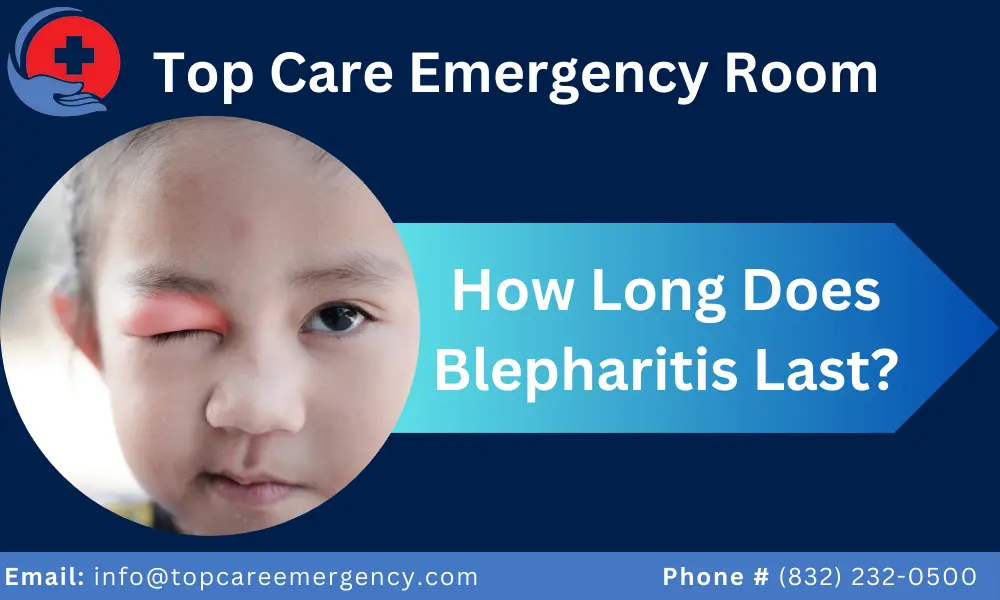
How Long Does Blepharitis Last?
If you have blepharitis, you may be wondering about blepharitis duration and how long the redness, irritation, and crusting around your eyelashes will last. How long blepharitis lasts depend on the type of blepharitis you have. Some cases improve within 1 to 3 weeks with proper care, while chronic blepharitis may continue for months or longer with symptoms that come and go.
Acute blepharitis, which usually develops suddenly, often begins improving within a few days once the cause is treated. Chronic blepharitis is different because it is often linked to ongoing issues such as blocked eyelid glands, dry eyes, rosacea, or skin conditions. It can usually be controlled, but flare-ups may return over time.
Your recovery time depends on several factors, including:
- The cause of your eyelid inflammation
- Whether the condition is acute or chronic
- How early treatment begins
- How consistently you follow eyelid care steps
A mild case may improve with simple home care, but many people need regular eyelid hygiene to keep symptoms from returning.
Quick Blepharitis Recovery Timeline
While every person heals differently, how long does blepharitis take to heal can depend on the type of blepharitis you have, the cause, and how consistently you follow eyelid care. These are common recovery timeframes:
- Mild blepharitis: May improve within several days to a few weeks with consistent eyelid care.
- Acute blepharitis: Often starts improving within 3 to 7 days and usually clears within 1 to 3 weeks.
- Eyelid swelling: Often starts to go down within a few days to a week with warm compresses and regular eyelid cleaning. Swelling that gets worse quickly, spreads, or comes with fever should be checked right away.
- Blepharitis flares: Often last 1 to 3 weeks but can vary depending on the cause.
- Chronic blepharitis: May continue for months or years but can often be managed successfully.
What is blepharitis?
Blepharitis is inflammation of the eyelid margins, which is the area where your eyelashes grow. It usually affects the edges of the eyelids and may involve one or both eyes.
When the eyelids become inflamed, you may notice symptoms such as:
- Red or swollen eyelids
- Itching, burning, or tenderness
- A gritty feeling, like something is stuck in your eye
- Crusting or flaky buildup around the eyelashes
- Watery eyes
- Dryness or irritation
- Temporary blurry vision
Some people describe blepharitis as waking up with eyelids that feel sticky, irritated, or covered with small flakes near the lashes.
Blepharitis is usually not contagious. It often happens because the eyelid glands become blocked, bacteria increase around the eyelashes, or another condition causes inflammation. Although it can be frustrating, most people can manage symptoms with the right combination of treatment and daily eyelid care.
Types of Blepharitis
Blepharitis is usually grouped by which part of the eyelid is affected:
- Anterior blepharitis: Affects the outer front edge of the eyelid, where the eyelashes attach. It is often linked to bacteria or dandruff on the scalp and eyebrows.
- Posterior blepharitis: Affects the inner edge of the eyelid, where the meibomian glands release oil. It is often linked to blocked glands, rosacea, or dry eye.
- Mixed blepharitis: A combination of both types at the same time.
The type can affect how long symptoms last. Posterior blepharitis is often more persistent because blocked oil glands usually need ongoing care. Anterior blepharitis may settle sooner when a specific trigger, such as bacteria or an irritant, is treated, although it can also return.
What Causes Blepharitis?
Blepharitis can develop for different reasons, and understanding the cause is important because treatment depends on what is triggering the inflammation. Common causes include:
- Bacteria on the eyelids: Bacteria normally live on the skin, but an imbalance around the eyelashes can contribute to irritation and inflammation.
- Blocked or poorly functioning meibomian glands: These tiny glands produce oils that help keep your tears stable. When they become blocked, the eyelids may become inflamed and dry eye symptoms can develop.
- Seborrheic dermatitis: A skin condition similar to dandruff that can affect the scalp, eyebrows, and eyelids.
- Rosacea: A skin condition that may also affect the eyes and eyelid edges.
- Eyelash mites (Demodex): Microscopic mites around the eyelashes may contribute to inflammation in some people.
- Allergies and irritants: Makeup, contact lens products, smoke, dust, and other irritants may trigger or worsen symptoms.
Blepharitis Healing Stages and Typical Timeline
Blepharitis does not always disappear overnight. Recovery usually happens gradually as inflammation decreases and the underlying cause is addressed. The healing process often follows these stages:
Onset or Flare
This is when symptoms first appear. You may notice itching, redness, swelling, burning, or crusting around your eyelashes. Symptoms can develop over several hours or a few days.
Active Inflammation
During this stage, discomfort is usually strongest. Your eyelids may feel sore, swollen, or irritated, and you may notice more scaling or buildup along the lash line. Eyelid swelling is usually most noticeable during this stage and typically begins to ease within a few days once consistent care starts.
Improvement Phase
With regular eyelid cleaning, warm compresses, and appropriate treatment, symptoms often start improving. Many people notice less irritation within days, while more complete improvement may take several weeks.
Maintenance Phase
For chronic blepharitis, improvement does not always mean the condition is gone forever. Regular eyelid care may still be needed to prevent future flare-ups.
Acute vs Chronic Blepharitis: How Long Does Each Last?
Blepharitis can behave differently depending on whether it is acute or chronic.
Chronic blepharitis does not mean you will have constant discomfort forever. Many people have long periods where their eyes feel normal once they find a routine that controls their symptoms.
| Feature | Acute Blepharitis | Chronic Blepharitis |
|---|---|---|
| Duration | A few days to a few weeks | Ongoing or recurrent |
| Symptoms | Often develop quickly | May come and go |
| Causes | Infection, inflammation, or irritation | Meibomian gland dysfunction, skin conditions |
| Course | May improve after the cause is treated | Flares and periods of improvement |
| Treatment | Depends on the cause | Ongoing eyelid care is often needed |
| Recurrence | Depends on the underlying cause | Common |
Can Blepharitis Be Cured? Does It Go Away on Its Own?
If you are wondering how long does blepharitis take to go away or how long for blepharitis to go away, the answer depends on the type of blepharitis you have and what is causing it. Acute blepharitis can often clear completely when the trigger is identified and treated. In many cases, acute blepharitis lasts about 1 to 3 weeks, depending on the cause and how well it responds to treatment. For example, if irritation, infection, or an allergic reaction causes the problem, symptoms may improve once that issue is addressed.
Chronic blepharitis is usually considered a condition that can be controlled rather than permanently cured with one treatment. It may take longer to improve and often requires ongoing care to reduce inflammation, protect the eyelids, and prevent frequent flare-ups.
Some mild cases may improve on their own, especially with simple eyelid care. However, many people need consistent cleaning and treatment because the underlying cause can continue even after symptoms temporarily improve. Understanding how long does it take for blepharitis to go away can help set realistic expectations and guide proper treatment. The next section explains the most common reasons blepharitis lingers or returns.
Why Does My Blepharitis Not Go Away or Keep Coming Back?
If your blepharitis keeps coming back or does not seem to improve, there may be an underlying reason. This does not always mean the condition is untreatable; it may mean the cause has not been fully addressed. Common reasons blepharitis may persist include:
- Stopping eyelid care too soon: Symptoms often return when daily cleaning stops as soon as the eyes feel better.
- Blocked oil glands: Meibomian glands can take weeks of regular warm compresses and cleaning to work normally again.
- An untreated skin condition: Rosacea, seborrheic dermatitis, and eczema can keep the eyelids inflamed until they are managed too.
- Ongoing irritants: Old or irritating eye makeup, contact lens products, and smoke can keep triggering inflammation.
- Treatment that does not match the cause: For example, antibiotics will not open blocked glands, and cases linked to eyelash mites may need a specific treatment.
Many people control blepharitis well once they find a routine that fits the cause. If symptoms keep returning, an eye care professional can help identify what is driving them.
Everyday Triggers That Can Set Off a Flare
Even when blepharitis is under control, certain habits and surroundings can bring symptoms back:
- Long periods of screen time, which reduce blinking and dry out the eyes
- Dry air from air conditioning, heating, or air travel
- Stress and poor sleep
- Allergy season or reactions to skin care products
- Sleeping in eye makeup or using expired products
- Touching or rubbing the eyes
Noticing which triggers come before your flares can help you prevent the next one.
How Long Does Blepharitis Take to Clear Up With Treatment?
With the right treatment, many people start feeling better within a few days. Symptoms such as itching, crusting, and irritation often improve gradually over 1 to 3 weeks.
Treatment may include warm compresses, eyelid cleaning, artificial tears, prescription medications, or treatment for underlying conditions. Chronic cases may take longer because the goal is not only to calm the current flare-up but also to prevent future episodes.
People often ask how long blepharitis lasts with antibiotics. The answer depends on whether bacteria are actually contributing to the inflammation. Antibiotics may help some cases, but they will not treat every cause of blepharitis, such as blocked glands or inflammation linked to skin conditions.
How Long Does Blepharitis Last Without Treatment?
Without treatment, blepharitis symptoms may continue for weeks, months, or longer. Some people have periods where symptoms improve temporarily, only for irritation and crusting to return later.
Stages of Blepharitis Without Treatment
Blepharitis is not formally staged, but untreated cases often move through these general phases:
- Mild irritation: Occasional itching, dryness, or light crusting along the lashes.
- Visible inflammation: Red, swollen eyelid edges with more frequent discomfort.
- Chronic symptoms: Ongoing dryness and irritation with repeated flares.
- Complications: Problems such as styes, chalazia (blocked eyelid glands), eyelash loss, dry eye, or irritation of the eye surface.
Even simple steps like warm compresses and gentle eyelid cleaning can make a difference. If symptoms continue, worsen, or affect your vision, an eye care professional can help identify the cause and recommend appropriate treatment.
Knowing when symptoms need medical attention is important. Our guide on when symptoms need medical care explains warning signs that should not be ignored.
How to Treat Blepharitis
The best treatment for blepharitis depends on what is causing the inflammation. In most cases, treatment focuses on keeping the eyelids clean, reducing irritation, and addressing problems such as blocked oil glands, infection, dry eyes, or skin conditions.
While blepharitis may not disappear instantly, consistent care can greatly reduce symptoms and help prevent future flare-ups.
Home Care and Nonprescription Options
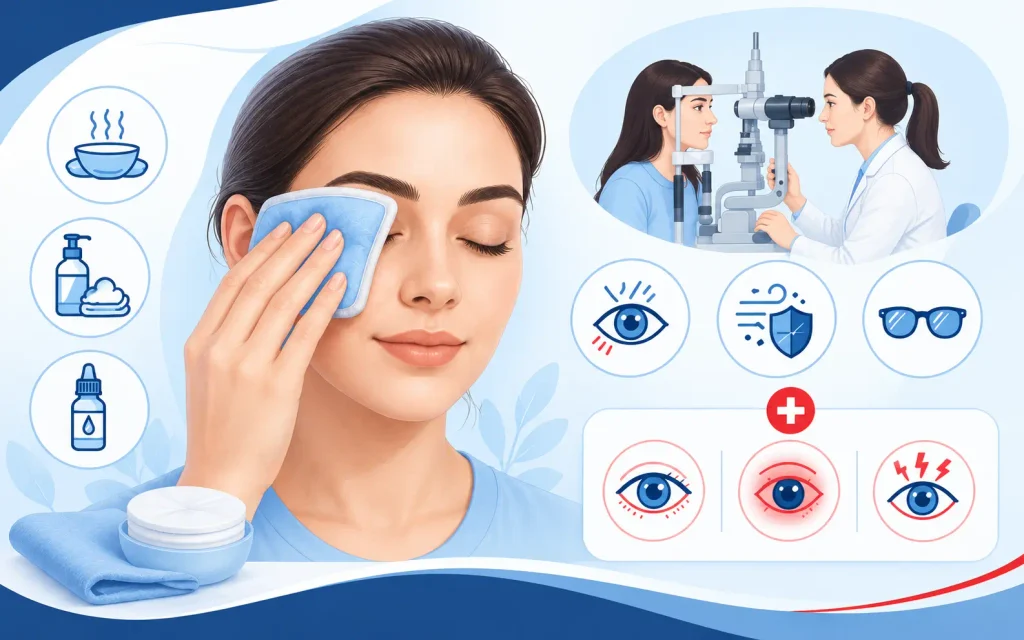
For many people, daily eyelid care is the foundation of blepharitis treatment. These simple steps can help loosen buildup, improve eyelid gland function, and reduce irritation. Helpful home care steps include:
- Warm compresses: Apply a clean warm compress to closed eyelids for about 5–10 minutes, once or twice daily. This help soften crusts and improve oil flow from blocked eyelid glands.
- Daily eyelid cleaning: Use commercial eyelid wipes or a gentle eyelid cleanser to remove flakes, oils, and debris along the lash line.
- Cool compresses for swelling: If your eyelids feel hot, puffy, or swollen, a clean cool compress can ease discomfort. Sleeping with your head slightly raised may also reduce morning puffiness.
- Artificial tears: Lubricating eye drops, ideally without preservatives, may help relieve dryness, burning, and irritation.
- Avoid eye makeup during flares: Mascara, eyeliner, and other products may worsen irritation while your eyelids are inflamed.
- Avoid rubbing your eyes: Rubbing can increase inflammation and make symptoms last longer.
- Limit contact lens use during active symptoms: Contact lenses may feel uncomfortable when the eyes are irritated.
- Omega 3 fatty acids: Some eye doctors suggest fish oil or flaxseed oil to help reduce inflammation linked to blocked oil glands. Check with your doctor before starting supplements.
Many people search for how to cure blepharitis fast at home or how to treat blepharitis overnight. However, blepharitis usually cannot be completely cured overnight. The goal of home care is to reduce symptoms quickly and support long-term healing.
Medical Treatments for Blepharitis
If home care does not improve symptoms, or if the inflammation is caused by an underlying condition, a healthcare professional may recommend additional treatment. Medical treatment options may include:
- Prescription antibiotic ointments or eye drops: These may be recommended when bacteria contribute to eyelid inflammation or infection.
- Eye drops that reduce inflammation: Short courses of steroid eye drops may sometimes be used for significant inflammation, but only under medical supervision.
- Treatment for related conditions: Managing rosacea, seborrheic dermatitis, dry eye, or allergies may help control recurring symptoms.
- Treatments done in the office: For stubborn or chronic cases, an eye doctor may recommend procedures such as microblepharoexfoliation (BlephEx), which deep cleans the eyelid edges; thermal pulsation, which uses heat and gentle pressure to open blocked oil glands; or intense pulsed light (IPL), which targets inflammation around the glands.
People often ask whether over-the-counter antibiotics such as chloramphenicol treat blepharitis. Antibiotics are not needed for every case of blepharitis, and the correct medication depends on the cause. In the United States, antibiotic eye drops and ointments for blepharitis require a prescription, and they help only when bacteria are part of the cause. A clinician can determine whether antibiotics are appropriate for you.
Can Blepharitis Affect Vision?
Blepharitis can sometimes affect vision temporarily, but permanent vision loss is uncommon. You may notice blurry vision because of:
- Excess tears or unstable tear film
- Dryness caused by eyelid gland problems
- Debris or crusting near the eyelashes
- Irritation of the eye surface
In most cases, this blurriness improves with blinking, artificial tears, or eyelid cleaning. If you have ongoing redness or irritation, our eye redness care page explains how we can help evaluate your symptoms. Vision changes that do not clear, or that come with pain or light sensitivity, need prompt evaluation.
Contacts, Eyelashes, and Daily Life With Blepharitis
Blepharitis can affect everyday activities, especially when symptoms are active. The good news is that most people can continue normal routines once symptoms are controlled.
Can I Wear Contact Lenses With Blepharitis?
It is usually best to avoid contact lenses during an active flare-up if they increase irritation, dryness, or discomfort.
Your eye doctor may recommend waiting until inflammation improves before wearing contacts again. When you restart wearing lenses, follow proper cleaning and replacement schedules to reduce irritation.
Blepharitis and Eyelash Loss: Will They Grow Back?
In some cases, severe or lasting eyelid inflammation can cause temporary eyelash loss. This happens because inflammation around the lash follicles can affect normal growth.
The good news is that eyelashes usually grow back once the inflammation is controlled and the eyelid environment improves.
How long does it take for eyelashes to grow back?
Once the eyelid inflammation settles, lost eyelashes usually start growing back within a few weeks. Most people see noticeable regrowth in about 6 to 8 weeks, although it can take a few months for lashes to return to their full length and thickness. This is because eyelashes grow in natural cycles, and each lash needs time to go through its growth phase.
Regrowth may be slower if the blepharitis is chronic or keeps flaring, since ongoing inflammation around the lash follicles can interrupt normal growth. Keeping up with eyelid hygiene and avoiding rubbing or pulling at your lashes gives them the best chance to grow back.
In rare cases, long periods of inflammation can damage the lash follicles. This may cause lashes to grow back thinner, grow in the wrong direction, or not return in certain spots. If your lashes are not growing back after a few months, or new lashes are rubbing against your eye, have your eyes checked by an eye care professional.
How to Prevent Blepharitis Flares
Because blepharitis can return, prevention is an important part of long-term management. Even when your eyes feel better, regular eyelid care can reduce the chance of future irritation. Ways to help prevent flare-ups include:
- Practice regular eyelid hygiene, especially if you have recurring symptoms.
- Remove makeup gently and completely before sleeping.
- Avoid using expired or irritating eye products.
- Manage underlying conditions such as rosacea, seborrheic dermatitis, and dry eye.
- Avoid touching or rubbing your eyes unnecessarily.
- Do not share towels, makeup, or eye products.
- Schedule regular eye exams if you experience repeated flare-ups.
When to See Doctor for Blepharitis
Most cases of blepharitis are not emergencies and can be managed with proper care. However, certain symptoms may indicate a more serious eye problem and should be evaluated quickly. Get medical care roght away if you experience:
- Severe eye pain
- Sudden vision loss or major vision changes
- Significant light sensitivity
- A very red eye with worsening discomfort
- Rapid swelling around the eye
- Fever or spreading redness around the eyelids
- Symptoms that continue getting worse despite treatment
If you are unsure whether your symptoms are typical for blepharitis, it is safer to have your eyes evaluated by a healthcare professional.
Conclusion
Blepharitis does not have one fixed healing time. Some acute cases improve within 1 to 3 weeks, while chronic blepharitis may last much longer with symptoms that come and go.
The key to improving recovery time is identifying the cause and following a consistent treatment routine. Regular eyelid hygiene, proper medical care when needed, and management of related conditions can greatly reduce discomfort and future flares.
If your symptoms are not improving, keep returning, or begin affecting your vision, seek evaluation from a healthcare professional. With the right approach, most people can successfully manage blepharitis and protect their eye comfort long term.
