

Common Gym Injuries and How to Avoid Them?
Engaging in regular exercise at the gym is a fantastic way to promote physical health but it’s essential to be mindful of potential injuries that can occur.
This article explores common gym injuries, offering insights into preventive measures to avoid them and recognizing when emergency room care may be necessary.
What Are Common Gym Injuries?
Some traumatic injuries happen suddenly, while others are due to gradual wear and tear. Overall, the most common gym injuries are muscle strains or ligament sprains, from eyer exertion, careless technique, lack of appropriate conditioning, or from fatigue.
Let’s take a closer look at some of the most frequently encountered gym injuries:
1. Strains and Sprains
- Sudden loads or a lack of proper warm-up can cause muscle strains (hamstring, calf, lower back)
- Ligament sprains (ankle, knee) occur from cutting, jumping or playing on an uneven surface
- Pain, swelling, bruising, loss of strength and ability are signs of overexertion.
2. Joint Injuries
- Shoulder: rotator cuff tendinopathy/tears, impingement with shoulder press, or overhead lifts.
- Knee: patellofemoral pain, meniscus irritation/tears, ACL/MCL sprains with squats lunges or pivoting.
3. Tendonitis
- Medial/Lateral Epicondylitis (golfer’s/tennis elbow) caused by rows, curls, and grips.
- Jumping and sprinting or rapid load changes cause strains in the achilles and patellar tendons.
4. Fractures and Dislocations
- Repetitive impact with inadequate recovery causes stress fractures in the foot and shins.
- Acute fractures/dislocations result from drops, slips, and poorly executed lifts (clavicle, wrist, shoulder).
5. Ligament Tears
- Sudden landing and/or cutting can result in tears in the ACL, MCL, or high grade ankle ligaments.
- Red flags: pop + swelling, instability, inability to bear weight.
How to Avoid Gym Injuries?
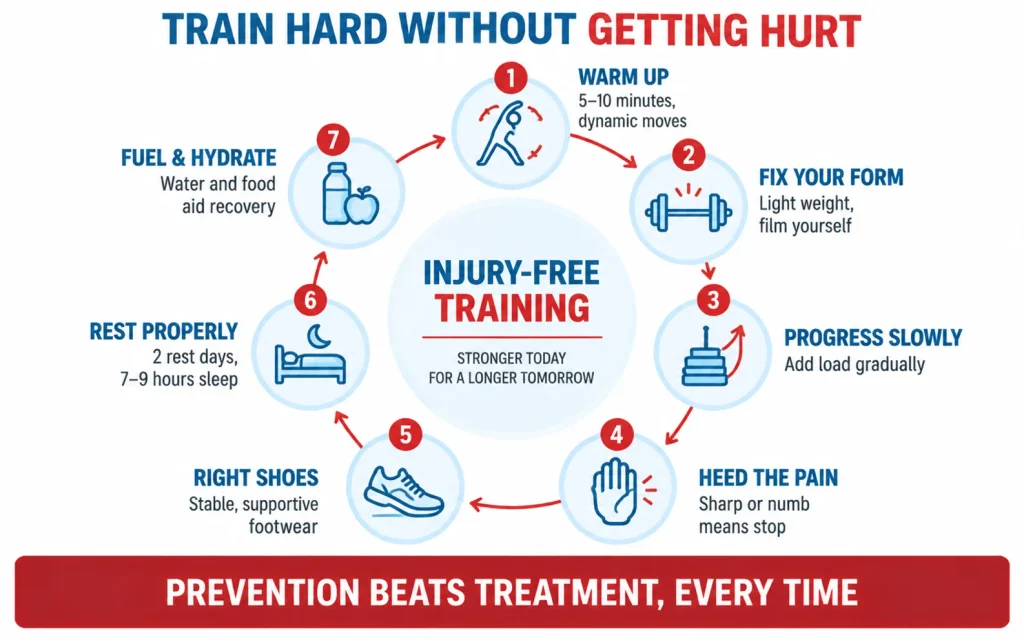
Prevention beats treatment. Use these evidence‑based steps to reduce fitness injuries and stay consistent.
1. Proper Warm-Up
Perform 5–10 minutes of light cardiovascular exercise and dynamic mobility (leg and arm circles, hip openers, etc.).
2. Correct Technique
- Learn all lifts with a good coach, utilize neutral spine and knee tracking, and as well as controlling the tempo.
- Learn to use a mirror and film yourself, then perform the lift at a lighter weight.
3. Gradual Progress
Use progressive overload and deload weeks to avoid overtraining. Rapid increases in weight and volume result in tendonitis and overuse injuries.
4. Listen to your body
Sharp pains, joints that feel like they are collapsing and pain with numbness/prickling sensations are all signs that you must cease what you are doing. Why? Because “pushing through” minor strains almost guarantees major injuries.
5. Wear the Right Shoes
Proper footwear or heel inserts may also be necessary, depending on the foot/ankle position. Training shoes with high stability also help decrease the risk of ankle and/or knee issues.
6. Rest and Recovery
Take two full rest days a week and get 7–9 hours of sleep. Training cooks muscles, and you want to avoid tendon injury.
7. Hydration and Nutrition
Maintaining proper hydration and nutrition is vital for overall health and plays a significant role in the recovery process. Dehydration can contribute to muscle cramps and fatigue, increasing the risk of injuries.
Visiting Emergency Room for Gym-Related Injuries
Use this triage guide when you’re injured at the gym and unsure where to go
| Symptoms | When to Seek Emergency Care |
|---|---|
| Severe Pain | Intense, unrelenting pain that doesn’t improve with rest/ice/OTC meds. |
| Dislocation or Fracture | Visible deformity, bone out of place, or suspected break after a fall/drop. |
| Inability to Move or Bear Weight | Can’t lift the limb or take 4 steps; knee/ankle gives way repeatedly. |
| Uncontrolled Bleeding | Soaking through dressings or spurting blood. |
| Head Injuries | Any significant blow to the head, loss of consciousness, confusion, vomiting, or worsening headache. |
| Loss of Consciousness | Fainting during/after workout needs evaluation. |
| Seizures | Any seizure during or after exercise is an emergency. |
| Breathing Difficulties | Chest pain, wheeze, or shortness of breath at rest. |
| Allergic Reactions | Hives, swelling of lips/tongue, or trouble breathing (possible exercise‑induced allergic reaction). |
Go to the ER now for the above. For moderate sprains/strains without red flags, urgent care or a sports injury specialist near me can handle imaging, bracing, and rehab referrals.
Always keep in mind that your health and safety should remain your utmost priority. If you or someone around you experiences any of these symptoms, don’t hesitate to call 911 or visit the nearest emergency room. Taking swift action can have a substantial impact on preventing additional complications. For joint and ligament issues, sprained ankle urgent care provides specialized support.
However, for less severe injuries, the preventive tips mentioned earlier should suffice. Always use your judgment and prioritize safety when it comes to gym-related injuries.
Conclusions
Most gym injuries are preventable with smart programming, technique, and recovery. Deformity, inability to weight bear, severe swelling, neuro-symptoms, issues related to the head and/or chest, should prompt you to seek medical assistance in the emergency department. Sports injury emergency care and specialists will enable you to return to training as quickly as it is safe to do so.
Remember, a balanced approach to fitness that includes proper preparation, technique, and recovery is fundamental to enjoying the benefits of a gym workout without compromising your well-being.
