

Should I Go to Urgent Care for Pelvic Pain?
Pelvic pain can be a disconcerting symptom, and understanding when to seek urgent care or emergency room attention is crucial for timely and appropriate medical intervention.
This article explores the factors influencing the decision to go to urgent care, signs that warrant immediate attention in the emergency room, and the importance of addressing pelvic pain promptly.
Why Pelvic Pain Is Often Difficult to Diagnose
Pelvic pain overlaps across urinary, gynecologic, and GI systems; early signs of serious causes (PID, ectopic pregnancy) can be subtle, so trend and severity matter as much as location.
There are several reasons why diagnosis is more complicated:
Overlapping symptoms
UTI, ovarian cysts, constipation, and muscle strain can all feel similar; this overlap delays correct diagnosis without an exam.
Referred and early pain
Pain may originate from the kidney or back; conditions like PID or ectopic pregnancy can start mild before escalating.
There is often overlap of symptoms and a medical examination is the safest method of determining the cause. If you can be diagnosed as early as possible, it will help to avoid complications and you will be treated accordingly.
Going to Urgent Care for Pelvic Pain
Urgent care is appropriate for mild‑to‑moderate, stable pelvic pain without red flags, especially when you need same‑day testing or treatment. For adult urgent care needs, these facilities provide accessible evaluation and treatment. Factors that might lead you to consider urgent care for pelvic pain include:
1. Mild to Moderate Pain
Choose urgent care when pain is tolerable, not rapidly worsening, and you can walk, hydrate, and keep fluids down.
2. Suspected Non-Emergency Causes
Typical urgent‑care cases: UTI symptoms, mild menstrual cramps, minor strain, low‑grade fever without vomiting, or known cyst with stable pain.
3. Availability and Accessibility
Urgent care often has shorter waits than ER; however, call ahead if you think you need imaging (ultrasound) or a pelvic exam.
Pelvic Pain in Men vs Women
Women have more gynecologic causes (cysts, PID, endometriosis, ectopic pregnancy); men more often have urologic/prostate or musculoskeletal causes.
Pelvic pain can be a symptom of various underlying conditions, and understanding its causes is crucial for effective management. Gynecological conditions such as ovarian cysts, endometriosis, and pelvic inflammatory disease are major causes in women. Urinary tract infection and prostatitis are two illnesses that can cause pelvic pain in men.
Additionally, gastrointestinal problems, such as irritable bowel syndrome (IBS), and musculoskeletal issues, like pelvic floor dysfunction, can contribute to pelvic pain in both genders. Identifying the specific cause is essential for tailored treatment and relief.
Common Causes of Pelvic Pain in Men
Men experience pelvic pain for a range of urological, gastrointestinal and musculoskeletal reasons. Recognizing which condition is responsible is the first step toward treatment.
- Prostatitis
- Urinary Tract Infections
- Pelvic Floor Dysfunction
- Epididymitis
- Hernia
- IBS/constipation
Common Causes of Pelvic Pain in Women
Women face a broader range of potential causes due to the complexity of the female reproductive system. Both gynecological and gastrointestinal conditions can produce similar symptoms.
- Ovarian Cysts
- Endometriosis
- Pelvic Inflammatory Disease
- Irritable Bowel Syndrome
- Gastrointestinal Infections
- Pelvic Floor Dysfunction
- Torsion
- PID
- Endometriosis
- Fibroids
- Ectopic pregnancy
- UTI and GI causes
What to Expect During an Urgent Care Visit for Pelvic Pain
First, if you have a question, you should ask, “Should I go to urgent care for pelvic pain?”, the answer is based on your symptoms. Urgent care is the best place to go for pelvic pain that is mild to moderate, but not an emergency. Providers can assess your symptoms, start treatment and decide if you need to see a specialist or attend for an emergency.
Medical History
Expect questions on onset, location (left/right), character (sharp/pressure), cycle relation, urination/sex/bowel symptoms, pregnancy possibility, and discharge/fever. Your provider will ask questions about:
Physical Examination
Abdominal and pelvic tenderness checks; pelvic exam is done when medically indicated and consented.
Diagnostic Testing
Depending on your symptoms, your provider may recommend:
- Urinalysis/culture, pregnancy test (if applicable), STI testing.
- Pelvic ultrasound only if available on‑site or via referral; many urgent cares cannot perform it immediately.
Treatment or Referral
Antibiotics for bacterial infections, antifungals for yeast, analgesics, fluids; immediate ER referral if torsion, ectopic pregnancy, ruptured cyst with instability, or surgical abdomen is suspected.
Signs That Warrant Emergency Room Attention
While urgent care may be appropriate for some cases of pelvic pain, certain signs and symptoms necessitate immediate attention in the emergency room. If you experience any of the following, seeking emergency room care is imperative. For severe symptoms, abdominal pain emergency care may be required to address underlying conditions.
1. Severe Pain
Unbearable or rapidly escalating pain, especially if it began within minutes, needs ER evaluation.
2. Bleeding
Heavy vaginal bleeding (about one pad/hour for several hours) or bleeding with dizziness/fainting requires urgent care.
3. Signs of Infection
High fever with chills, vomiting, or feeling very unwell plus pelvic pain suggests serious infection/abscess.
4. Abdominal Rigidity
A hard, board‑like abdomen or marked tenderness/guarding can indicate peritonitis or a surgical abdomen.
5. Pregnancy Complications
Pain in pregnancy or with a positive test, especially one‑sided pain, bleeding, shoulder pain, or fainting, must be evaluated urgently to rule out ectopic pregnancy.
Also go now for sudden one‑sided pelvic pain with nausea/vomiting (possible ovarian torsion) or sudden severe testicular pain.
When to See a Doctor for Pelvic Pain?
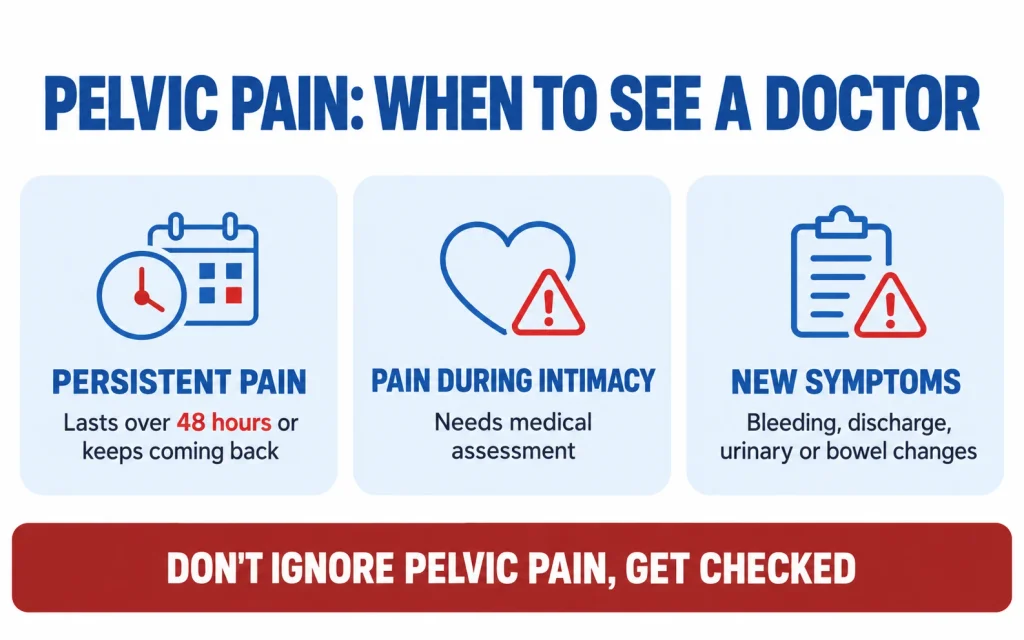
Regardless of the urgency, it’s important to see a emergency physician in the ER for pelvic pain if:
1. Persistent Pain
Pain lasting >48 hours, recurring over cycles, or not responding to usual measures needs evaluation.
2. Discomfort During Intercourse
Pain with sex (dyspareunia) warrants medical assessment to identify treatable causes.
3. New oR Unexplained Symptoms
New bleeding, discharge, urinary/bowel changes, or weight loss with pelvic pain should be discussed with a clinician.
Treatment for Chronic Pelvic Pain
Care is cause driven: medications (analgesics, hormonal therapy), pelvic‑floor physical therapy, treatment of GI/urinary contributors, and specialist coordination (gynecology/urology/gastroenterology).
Men with prostatitis may benefit from antibiotics and anti-inflammatory medications. Pelvic floor physical therapy is often essential for both genders, addressing musculoskeletal aspects.
Pain management strategies, such as medications and nerve blocks, may also play a role. Collaborative care involving gynecologists, urologists, gastroenterologists, and physical therapists is key to a holistic treatment plan.
When to See a Gynecologist or Urologist for Pelvic Pain
An urgent care is good for acute symptoms, but persistent or recurrent pain may need a gynecologist or urologist evaluation.
Women Should See a Gynecologist If They Have:
- Suspected/known endometriosis, severe period pain, dyspareunia, abnormal uterine bleeding, recurrent ovarian cysts, IUD issues, or persistent pelvic pain after initial treatment.
A common question that women have is “Can you go to urgent care for endometriosis? While urgent care can help treat sudden flares, it’s best for long-term treatment to be carried out by a gynecologist.
Men Should See a Urologist If They Have:
Recurrent UTIs, prostatitis/CPPS symptoms, hematuria, or persistent pelvic/urinary pain despite initial care.
Taking Control of Pelvic Health
Beyond seeking immediate care when necessary, individuals can also take proactive steps to promote pelvic health:
1. Regular Gynecological Check-ups
Routine exams help detect infections, cysts, or structural issues early.
2. Pelvic Floor Exercises
Targeted exercises or pelvic‑floor PT can reduce muscle‑related pain and improve function.
3. Healthy Lifestyle Choices
Hydration, fiber, regular movement, and stress management reduce GI and musculoskeletal contributors.
Pelvic Pain Should Never Be Ignored
Early evaluation prevents complications (e.g., untreated UTI/PID), speeds relief, and identifies serious causes before they escalate.
Go to ER now if:
Sudden severe pain, heavy bleeding, high fever + vomiting, rigid abdomen, pregnancy‑related pain/bleeding, or one‑sided pain with nausea/vomiting.
Use urgent care/primary care if:
Mild‑moderate, stable pain without red flags, especially with UTI symptoms, mild cramps, or low‑grade fever.
Conclusion
Navigating pelvic pain involves considering the severity of symptoms and understanding when to seek urgent care or emergency room attention. While urgent care may be suitable for certain cases, signs of severe pain, bleeding, infection, abdominal rigidity, or pregnancy complications warrant immediate evaluation in the emergency room. Prompt medical attention is crucial for diagnosing and addressing the root causes of pelvic pain, ensuring the best possible outcomes for your health and well-being.
