

Can Accutane Cause Yeast Infections?
Accutane (isotretinoin) is not a known or established direct cause of yeast infections. But it can cause significant dryness of the skin and mucous membranes, including vaginal dryness. If you are taking Accutane and feel itching, burning, abnormal discharge, or any other symptoms, a healthcare professional will be able to tell you if you have a yeast infection or something else. If symptoms persist, Fungal infection treatment options are available to address the underlying cause.
Can Accutane Cause Yeast Infections?
Accutane does not commonly cause yeast infections, and a direct link has not been clearly established. Isotretinoin is best known for causing dryness of the skin and mucous membranes. In some people, this can cause genital or vaginal dryness and irritation, which may feel similar to a yeast infection.
If you have itching, burning, swelling, unusual discharge, or pain, do not assume Accutane is the cause. These symptoms can have several causes and may need an accurate diagnosis.
What is Accutane?
Accutane is a brand name that is often used for isotretinoin, a prescription medication for severe acne. It decreases activity in your skin’s oil glands and may significantly decrease oil production.
Most common side effects of isotretinoin include dryness. Isotretinoin reduces oil, affecting the skin and mucous membranes. Dry lips, dry skin, dry eyes and nasal dryness are well known.
Accutane, Dryness, and Yeast Infection Symptoms
Accutane can cause dryness of the skin and mucous membranes . The prescribing information from the FDA lists decreased vaginal lubrication and vaginal dryness as among the reported effects on the reproductive system.
This doesn’t mean that Accutane causes yeast infections directly. Yeast infections of the vagina usually occur when Candida grows out of control . Common symptoms include itching, burning, redness, swelling, soreness and thick white discharge.
If you get symptoms while you are on Accutane, your clinician will know if they’re from dryness, a yeast infection, or something else that’s irritating or infected.
Yeast Infection Symptoms
Yeast infection symptoms can differ by body area.
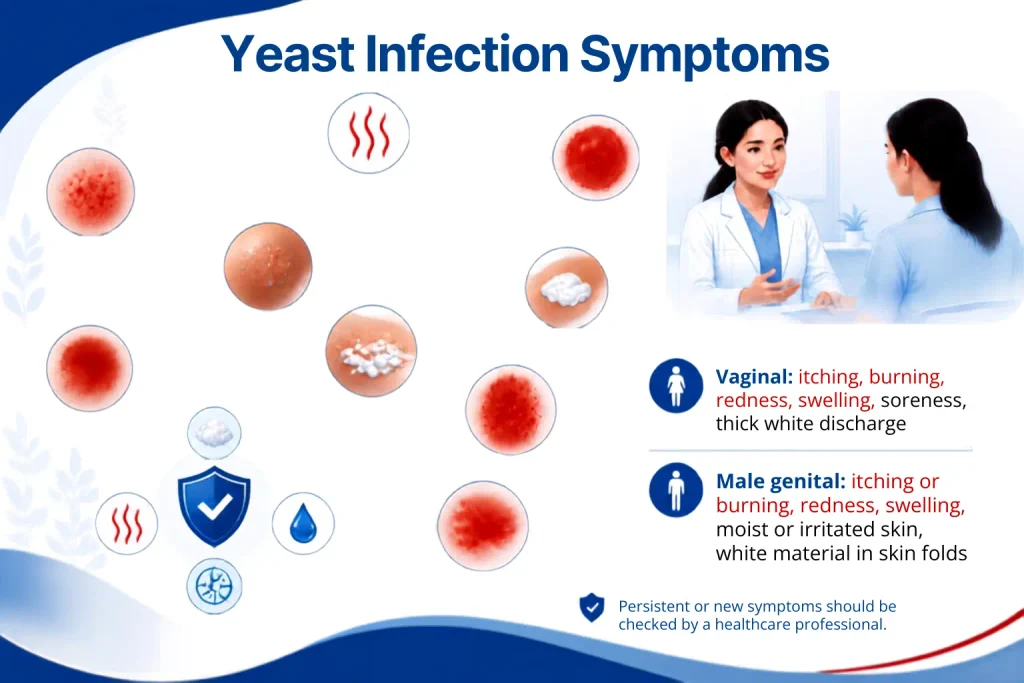
Vaginal yeast infection symptoms may include:
- Vaginal or vulvar itching and irritation
- Burning, especially during urination or sex
- Redness or swelling
- Vaginal soreness
- Thick, white discharge with little or no odor
Male genital yeast infection symptoms may include:
- Itching or burning of the penis
- Redness or swelling
- Moist skin
- Shiny or irritated skin
- Thick, white material in skin folds
These symptoms can also occur with other conditions, so persistent or new symptoms should be checked by a healthcare professional.
Accutane Side Effects in Men and Women
Many Accutane side effects can occur in both men and women. Some reproductive effects differ by sex.
| Side Effects | Men | Women |
|---|---|---|
| Dry skin and lips | Common | Common |
| Dry eyes or nose | Possible | Possible |
| Itching or rash | Possible | Possible |
| Hair thinning or loss | Possible | Possible |
| Sexual side effects | Reported | Reported |
| Vaginal dryness | N/A | Reported |
| Menstrual changes | N/A | Reported |
| Pregnancy risk | No pregnancy risk | Serious risk to an unborn baby |
The most common side effects include dry lips, dry skin, dry eyes, and other dryness-related problems.
Women who can become pregnant must follow the required pregnancy-prevention and testing rules during isotretinoin treatment because the medicine can cause severe birth defects.
When to Seek Medical Attention for a Yeast Infection
Talk to a healthcare professional if:
- This is your first suspected yeast infection
- You are not sure your symptoms are caused by yeast
- Symptoms do not improve after treatment
- Symptoms keep coming back
- You have severe redness, swelling, cracks, or sores
- You have fever, chills, or pelvic pain
- You are pregnant or have a weakened immune system
Most yeast infections do not require emergency care. Severe symptoms or signs of another infection may need prompt medical evaluation.
Taking Control of Your Health While Taking Accutane
Keep regular appointments during Accutane treatment. Inform your health care professional about any new or continuing side effects. Use the recommended skin or lip moisturizers to help with side effects of skin and lip dryness. Report to your health care professional genital or vaginal dryness, itching, burning, discharge or any changes related to urination.
You should not assume that a side effect is related to Accutane unless your health care professional says so. Some side effects may require specific treatment or monitoring.
Conclusions
Accutane is not a frequent or evident causative factor for yeast infections. Instead, isotretinoin can lead to significant dryness, including the vaginal area, which can lead to irritation similar to infection.
Nevertheless, if a person experiences itching, burning, unusual discharge, problems with urination, or other uncomfortable symptoms, a qualified professional will be able to assess the situation and offer the most effective treatment.
