
When To Go To Urgent Care?
Unexpected health issues can arise anytime that may last long, if not treated timely. Therefore, urgent care centres are built in almost every community to assist individuals in such crucial times.
These centres offer timely medical attention for almost all conditions that require immediate care and lead you to the emergency room. Moreover, they are beneficial and accessible, with walk-in services without the need of an appointment.
Often a common concern arises about when to go to urgent care. People must know that urgent care clinics offer assistance with minor fractures to respiratory infections and allergic reactions. These clinics save your time, money, and efforts while ensuring timely care.
What Should You Know About Urgent Care Centers?
Urgent care services are offered by professional physicians who assist individuals in handling their health issues. These untimely emergencies require immediate attention without delay, and that’s why an urgent care center is important. In addition, these care centers provide their services with extended hours, including evenings and weekends.
According to a published report by Future Market Insights: “In the United States, urgent care centers have become a key part of healthcare, with expansions including digital check-in systems and telehealth services to improve access.”
These clinics are a convenient option for you or your loved ones to walk in whenever primary care providers are unavailable or if appointments are running late. Additionally, they provide a wide range of treatment options, from diagnostic tests to taking care of minor injuries and acute illnesses.
What Are Common Conditions Suitable for Urgent Care?
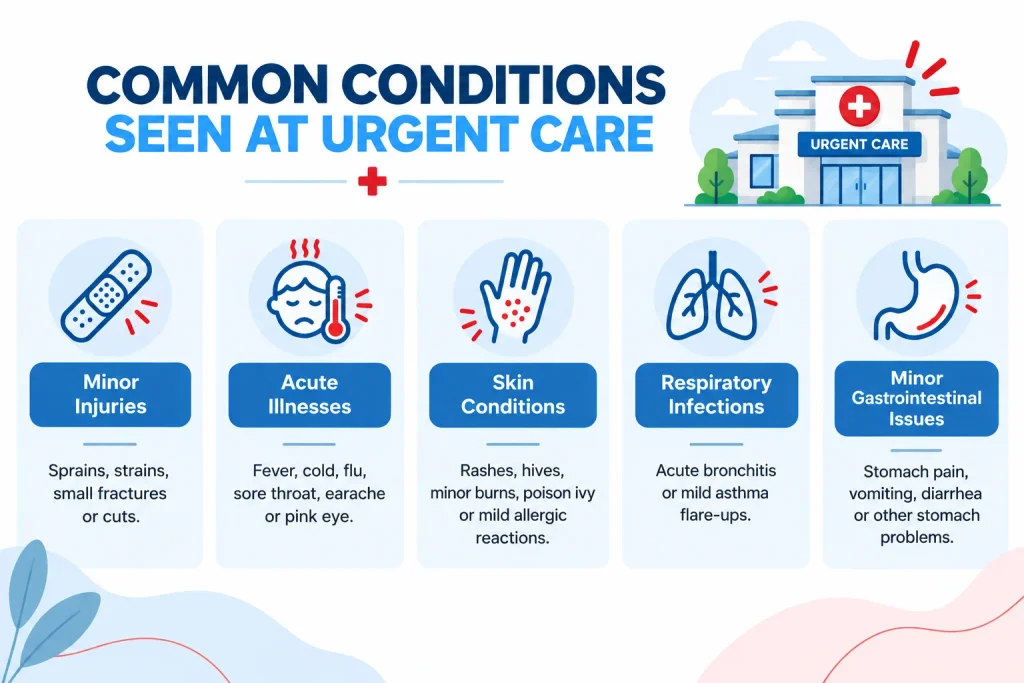
It is important to know when to go to an urgent care facility. These medical centers have qualified physicians who will evaluate and address several issues. They primarily address those concerns that are not life-threatening and do not require routine check-ups. Urgent care will assist with the following conditions:
Minor Injuries
Minor injuries include sprains, strains, small fractures, and superficial cuts that require stitches.
Acute Illnesses
Fever urgent care also becomes essential when cold, flu, sore throat, earache, pink eye, and other similar seasonal illnesses occur at the same time.
Skin Conditions
Urgent care conditions also involve everyday skin rashes, hives, minor burns, poison ivy, or minor allergic reactions. Therefore, urgent care for allergies also becomes necessary at times.
Respiratory Infections
Acute bronchitis and mild asthma flare-ups are other conditions that may require urgent care.
Minor Gastrointestinal Issues
Abdominal pain emergency room visits involve conditions like bloody vomiting, diarrhea, and other stomach disorders.
These are a few common treatable conditions that highlight why urgent care is a practical option. People should know that these health problems cannot be ignored for days, but also don’t require emergency intervention.
When Should You Choose The Emergency Room Instead?
Sometimes what urgent care treats may not be sufficient for a patient. Therefore, emergency departments are suggested by the physicians. These departments are more equipped to deal with severe, life-threatening conditions.
Additionally, the top care er equipment can further assist the patient with immediate medical aid, including possible hospitalization. Furthermore, if a patient experiences symptoms that appear to be more critical and might lead to permanent damage, it is crucial to visit the ER or call emergency services.
When deciding on when to go to urgent care or the emergency room, know that urgent care is not suitable for the following:
- Chest pain with added symptoms of a heart attack
- When pink eye is becoming common, and an ER eye doctor can immediately control further damage
- Signs of stroke that may lead to facial drooping, arm weakness, or difficulty speaking
- Severe difficulty breathing
- Head injuries with blood loss leading to unconsciousness
- Severe bleeding from cuts or other injuries
- Seizures or sudden unconsciousness
- Poisoning, overdose, or severe allergic reactions, such as those due to hives on skin
- High fever with stiff neck, mental confusion, or serious breathing issues
- Serious burns and broken bones requiring orthopedic care
In these situations, time is critical and the emergency room’s resources, including specialists and advanced imaging, are essential.
Why Is Urgent Care Better Than Primary Care?
Patients and caregivers should be aware of the fact that though primary care physicians (PCPs) offer you optimal care for managing chronic conditions and preventative medicine. However, these specialized physicians often cannot provide immediate same-day appointments.
For health problems that may occur unexpectedly immediate attention is necessary, which is offered by urgent care centres. Moreover, these clinics can quickly treat conditions that won’t harm but still need to be monitored. The following are not primary care conditions so it is better to opt for urgent care in the first place.
- Chronic disease management such as diabetes, hypertension, or asthma routine check-ups
- Preventive care such as vaccinations and screenings
- Prescription refills and routine follow-up care
- Seasonal or chronic allergy management
| Get Urgent Care Assistance For Your Healthcare Problems Without Appointments Contact Us to Get More Information |
Why Is Urgent Care Becoming An Asset To Healthcare Industries?
The popularity of urgent care clinics is gradually increasing due to various factors. These centers are now leaving positive impacts due to the facilities they offer to every patient who walks in. The following are a few examples of why people opt for urgent care clinics in the first place:
- Advancements in electronic health record (EHR) systems have helped urgent care centers increase patient volume. They have also helped generate considerable revenue while reducing waiting hours and administrative burdens.
- Stories of urgent care clinics implementing telehealth and digital check-ins have improved patient experience and convenience.
- Case studies showing how urgent care centers have reduced overcrowding in emergency departments by managing non-emergency cases effectively.
- Examples of financial and operational turnaround at urgent care centers using modern health IT solutions to improve claims processing and billing efficiency.
What Are The Benefits Of Using Urgent Care?
When you understand when to go to urgent care, you should know the benefits that add further value.
- Accessibility without appointments and less waiting hours than ERs
- Extended hours beyond regular office times
- Cost-effective compared to emergency room visits
- Provides many diagnostic services such as X-rays, lab tests, and basic treatments on-site
- Helps reduce ER overcrowding by managing non-emergency cases
How To Prepare For An Urgent Care Visit
When preparing for an urgent care visit, quickly search for urgent care near me. In addition, knowing your insurance coverage also prepare you for unexpected expenses. Moreover, the patient must carry personal health information with them, including allergies, current medications, and past medical history, to provide at the visit.
Why Choose Top Care ER?
Top ER Care understands healthcare emergencies and aims to offer you quality and reliable services on time. Our experts not only offer you a range of comprehensive services but also guide you on how to deal with your health conditions. We meet your healthcare standards and our professionals work diligently to meet the requirements for all ages.
Conclusions
The demands of urgent care centers have increased over time. They play a crucial role by offering timely, accessible, and affordable care. These centres even reduce the burdens of emergency rooms by managing immediate health needs. Therefore, caregivers must understand when to use urgent care versus emergency room services or primary care to get appropriate treatment.
