

Symptoms, Causes and Foot Tendonitis Treatment
Foot pain can stop you from doing the simplest things, walking, standing or even resting comfortably. One common reason behind this discomfort is irritation in the tendons of the foot. If you’re searching for foot tendonitis treatment, chances are you’re dealing with ongoing pain that won’t go away on its own.
The good news? Most cases can be managed at home with the right steps. In this guide, you’ll learn what foot Tendonitis feels like, why it happens and exactly how to treat it without confusion or complicated terms.
What Foot Tendonitis Pain Feels Like
Foot tendon pain doesn’t always feel the same for everyone, but there are some clear patterns most people notice early on.
Where Does the Foot Tendonitis Pain Usually Show up
You may feel discomfort in different areas depending on which tendon is affected:
- Top of the foot (often from tight shoes or overuse)
- Back of the heel (common with walking or running)
- Inner side of the foot (linked to flat feet)
- Outer edge (often from twisting or uneven walking)
Common Signs of Foot Tendonitis
- A dull or sharp ache that gets worse with movement
- Swelling or slight puffiness in one area
- Stiffness, especially after rest
- Tenderness when you press the spot
- Pain that improves with rest but returns with activity
Many people ignore these early warning signs of tendonitis, thinking it’s “just soreness”, which often makes things worse.
What Causes Tendon Pain in the Foot?
Understanding tendonitis causes and treatment helps you avoid repeating the same mistake during recovery.
Too Much Activity Too Soon
This is the most common reason behind foot Tendonitis. Suddenly walking long distances after being inactive, increasing running distance too quickly or standing for long hours without breaks can all trigger it. Your foot needs time to adjust and when pushed too fast, the tendons become irritated.
Foot Shape and Movement Issues
Your foot structure plays a big role in how pressure is distributed. Flat feet can strain the inner side, while high arches can stress the outer foot. Wearing worn-out or unsupportive shoes adds more pressure. Even tight shoes pressing on the top of your foot can lead to pain over time.
Sudden Strain or Minor Injury
A minor twist, awkward step or walking on an uneven surface can overload the tendons. You may not feel pain right away, but it often builds gradually over the next few days and becomes harder to ignore.
Effective Plan For Foot Tendonitis Treatment
When it comes to foot tendonitis treatment, simple steps done consistently work better than quick fixes, and knowing how to treat tendonitis early makes recovery much easier.
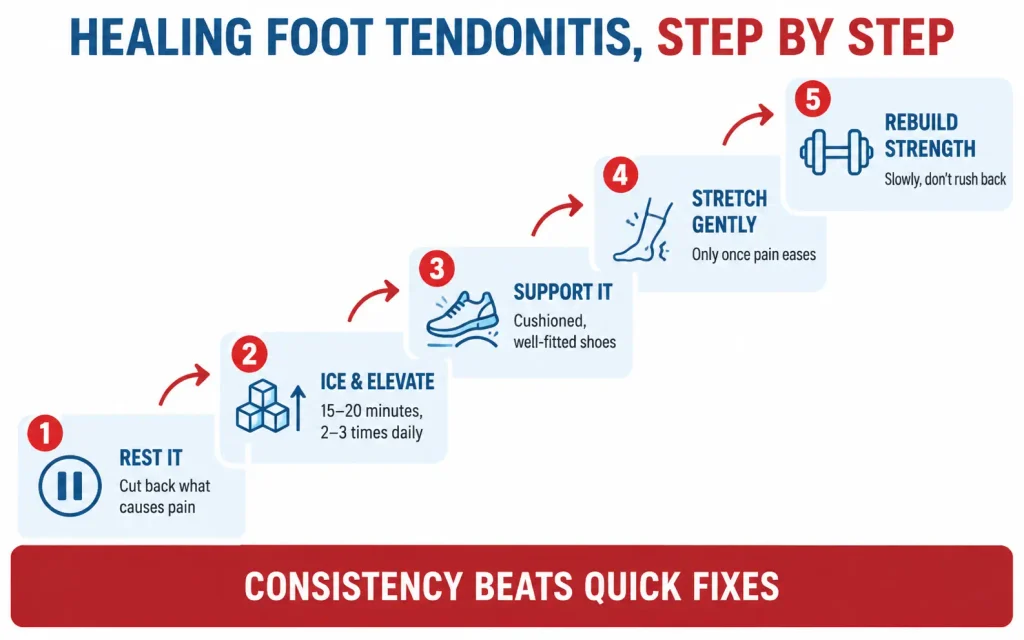
Rest and Activity Reduction
Stop or limit whatever caused the pain. If walking long distances hurts, cut back. If running triggered it, take a break. Pushing through pain delays healing.
Ice, Compression and Elevation
- Apply ice for 15–20 minutes, 2–3 times daily
- Use a light wrap if swelling is present
- Keep your foot elevated when resting
This reduces swelling and calms the irritated area. For those looking for additional relief methods, several home remedies for tendonitis can also be very effective alongside this approach.
Supportive Footwear and Support
Foot support makes a huge difference:
- Choose cushioned, well-fitted shoes
- Avoid flat, worn-out footwear
- Consider inserts if your feet roll inward or outward
In more painful cases, a temporary walking boot may be needed to fully rest the foot.
Stretching and Strengthening
Once pain starts improving:
- Stretch your foot and calf muscles gently
- Slowly rebuild strength with simple exercises
Don’t rush this step. Starting too early can bring the pain back.
Pain Relief Options
Over-the-counter pain relievers can help reduce discomfort, but they shouldn’t replace rest and recovery. Use them as support, not a solution.
When Foot Tendon Pain Signals a Serious Issue
Not all foot pain is harmless and in some cases, waiting can make things worse. If you cannot put weight on your foot, the pain is severe or keeps getting worse, swelling does not improve after a few days or you feel a sudden “pop” or tearing sensation, it may be a sign of a more serious issue that needs proper care.
It’s also important to know that foot tendonitis discomfort can feel similar to other problems like heel pain from the bottom of the foot, stress fractures, joint-related issues or nerve irritation. If your symptoms don’t follow the usual pattern or aren’t improving with basic care, getting it checked early is the safer choice. Understanding foot tendonitis recovery time can help set realistic expectations for your recovery timeline.
How to Keep Foot Tendonitis from Coming Back
Even after the pain is gone, your tendons can still get injured easily, so prevention should be part of your routine. Small, consistent changes in how you move, train and choose footwear can significantly reduce the risk of it returning.
- Instead of jumping back into full activity, increase your workload step by step to give your tendons time to adjust.
- Before any exercise or long periods of walking, take time to properly warm up so your muscles and tendons are prepared.
- Since worn-out shoes lose their support, replacing them regularly helps maintain proper foot alignment.
- Choosing footwear that matches your foot type can reduce unnecessary strain and improve overall comfort.
- When you notice pain or discomfort, treat it as a warning sign and scale back rather than pushing through it.
When Do Foot Tendonitis Symptoms Need ER Care?
Foot tendonitis can start with mild soreness but may quickly affect walking and balance. If swelling, stiffness or discomfort doesn’t improve with rest, it’s important to get it checked early. Get reliable care at Top Care ER for proper evaluation and relief.
If symptoms become more noticeable or make walking difficult, don’t wait to our ER team for timely guidance and care. You can also visit our nearby locations, including River Oaks ER and Montrose emergency care for focused assessment and the correct foot tendonitis treatment approach.
At Top Care ER, our team is experienced in treating foot tendon conditions with care designed to restore comfort and support steady movement.
