
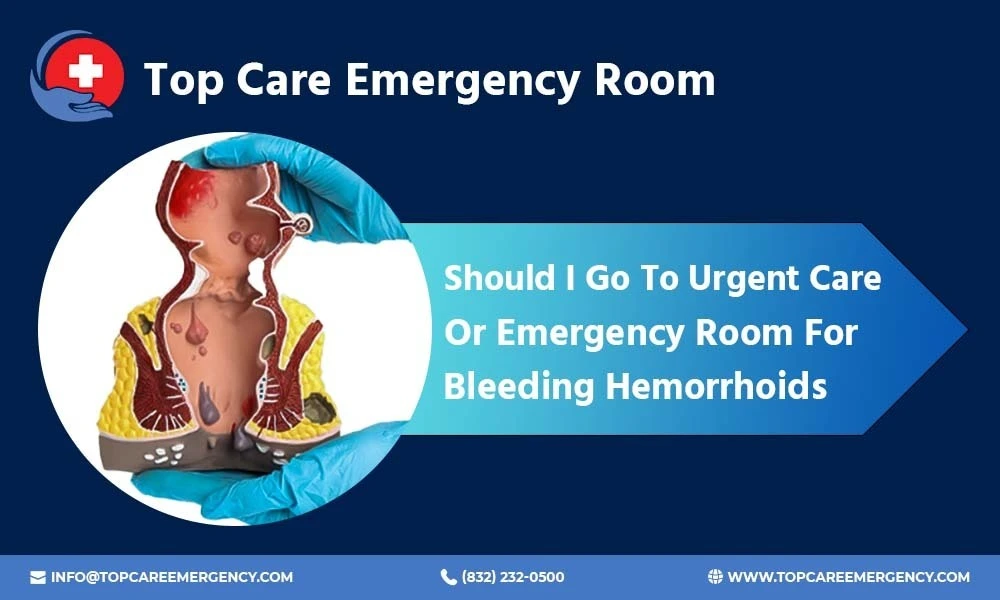
Urgent Care or ER for Bleeding Hemorrhoids? When to Seek Emergency Care
Older adults often experience bleeding in the bowel movements and soreness in the anal area. This issue is termed bleeding hemorrhoids and is common in both males and females as they reach their 50s. It usually occurs due to immense pressure on the abdominal area and hormonal changes after pregnancy and childbirth.
Therefore, it is important to understand when to seek medical care for hemorrhoids. In Houston, patients often wonder whether they should visit urgent care or ER for hemorrhoids depending on the severity of their symptoms. While some cases can be managed at home or treated through an urgent care center, persistent or heavy bleeding, severe pain, or signs of infection may require an emergency room visit, as these symptoms can lead to significant blood loss, dizziness, or other complications.
What Are Bleeding Hemorrhoids?
Commonly, hemorrhoids swell up the anal or rectal veins when they experience immense pressure on the abdomen. In addition, severe cases lead to straining during bowel movements, bleeding, obesity, or chronic constipation. These bleeding hemorrhoids are of two types:
Internal Hemorrhoids
These usually develop inside the rectum, which may bleed without much pain. These are often manageable at urgent care for hemorrhoids in Houston.
External Hemorrhoids
These are the ones under the skin that can itch, hurt, or form painful clots. These are also termed thrombosed hemorrhoids with bleeding that typically appears as bright red blood on toilet paper or in the bowl.
Common Symptoms of Bleeding Hemorrhoids
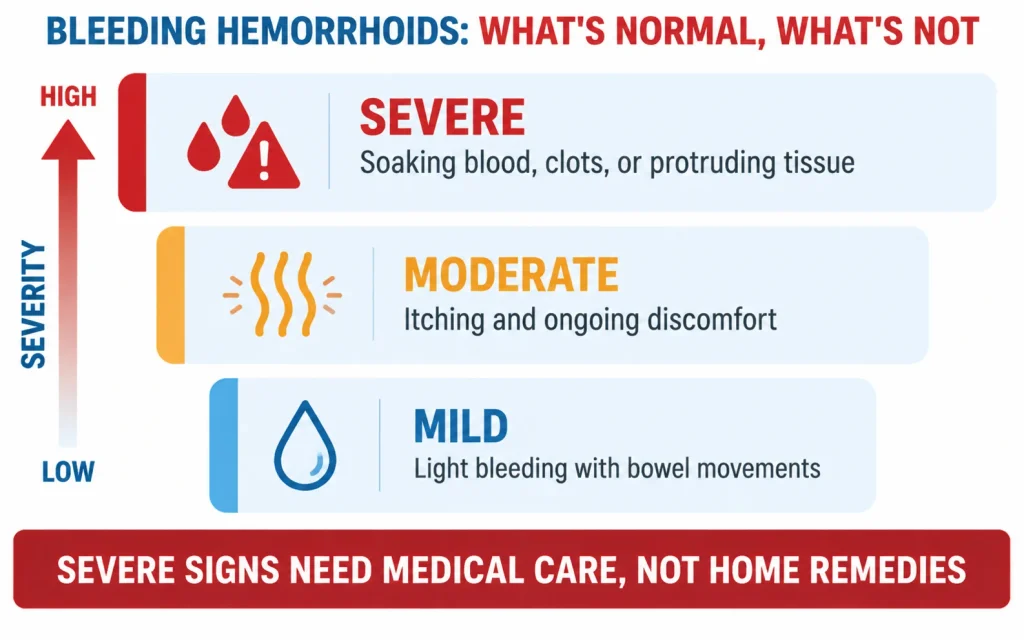
The following are a few symptoms that may not require treatment at an emergency room for hemorrhoids in Houston. These are common symptoms that can be managed at an urgent care center as well.
- Mild bleeding during bowel movements occurs as pressure on the abdomen also increases.
- Itching and discomfort in the anal or rectal area with worsening signs like blood soaking through tissue, clots, or leakage onto underwear.
- Prolapse, where tissue protrudes, and severe itching leading to skin rupture, making sitting impossible.
Suggested Home Remedies for Bleeding Hemorrhoids
If you are not having severe hemorrhoid bleeding, then patients must start with light home remedies before rushing to an urgent care or an emergency room. These simple treatments include:
- High-fiber diet including fruits, vegetables, whole grains, and legumes.
- Stool softeners like berries, pears, prunes, beans, lentils, oats, and brown rice. Moreover, it is recommended to drink plenty of water during bleeding hemorrhoids.
- Opt for witch hazel pads and sitz baths to reduce swelling.
- Patients can use over-the-counter creams with hydrocortisone or lidocaine for added relief.
- It is recommended to avoid straining to prevent aggravation.
With these simple home care treatments, most cases improve in days. However, if symptoms persist, you must seek proper hemorrhoid bleeding treatment.
When to Choose Urgent Care for Hemorrhoid Treatment
According to a published study at Medscape:
“Hemorrhoids affect a significant portion of the population, with prevalence varying by study and region. Symptomatic cases impact about 4.4% worldwide, while up to 50% of U.S. adults experience them over a lifetime, peaking between ages 45-65.”
If you are wondering should I go to urgent care for hemorrhoids or can urgent care help with hemorrhoids , urgent care for hemorrhoids in Houston must be considered if the following symptoms last longer than expected.
- Persistent bleeding with heavy flow but not profuse.
- Bleeding that also accompanies moderate pain and stays unresponsive to over-the-counter medications.
- Bleeding hemorrhoids often involve conditions that require urgent care if the patient sees signs of infection, like redness or warmth.
Specialized healthcare professionals at urgent care centers assist the patients with exams and prescribe stronger antibiotics for infection. Additionally, these specialists may perform minor procedures like rubber band ligation.
when to go to ER for Hemorrhoids
Understanding when does a hemorrhoid become an emergency can help you seek timely medical intervention. The following are a few scenarios where an emergency room for hemorrhoids in Houston may be a beneficial option to consider.
- If the patient experiences severe hemorrhoid bleeding that continues to cause weakness and fainting.
- If you have black tarry stools or blood in stool, consider an ER visit, as this may indicate serious issues like anemia or colon problems.
- ER is the best option if bleeding hemorrhoids lead to intense pain preventing walking, bluish anal lumps, or dizziness from blood loss.
Caregivers must know that ERs handle advanced interventions like excision of clots or imaging to rule out cancer.
Emergency Treatment Options for Bleeding Hemorrhoids
The following are a few hemorrhoid bleeding treatment options that Houston residents can consider to manage this issue.
Minimally Invasive Procedures
Urgent care for hemorrhoids in Houston often recommends rubber band ligation if the patient experiences persistent bleeding. During this treatment, a band cuts off the blood supply to the hemorrhoid and makes it shrink and fall off in about a week.
However, this treatment option is effective only for grades I-III internal bleeding hemorrhoids. Whereas, Sclerotherapy, which is another minimally invasive procedure, also helps to scar and shrink the vein.
On the other hand, infrared coagulation or electrocoagulation are also possible treatment options at specialized urgent care centers that use heat to block blood flow, all typically done without anesthesia.
Surgical Interventions
For severe cases, the emergency room for hemorrhoids in Houston can assist with recurrent, or grade III-IV bleeding cases. These are usually unresponsive to other methods. Therefore, carrying out a hemorrhoidectomy surgically at an ER removes the hemorrhoids under anesthesia. However, this may increase the recovery time.
Alternatives like stapled hemorrhoidopexy also help in lifting prolapsed tissue or hemorrhoidal artery ligation. This surgical intervention ties off feeding arteries via Doppler guidance, reducing pain and complications. Post-procedure care for bleeding hemorrhoids includes pain medications, fiber, and follow-ups to monitor healing.
| Bleeding Spots While Passing Stools? Get Checked for Bleeding Hemorrhoids Now Schedule Your Appointment |
Prevention Strategies to Manage Hemorrhoids
Bleeding hemorrhoids can be managed by maintaining your daily fiber intake (25-30g). Moreover, as long as the patient stays hydrated, it can be beneficial in controlling bleeding. Furthermore, multiple pelvic exercises can also help ease bowel habits.
For hemorrhoid bleeding treatment, it is also recommended to limit time on the toilet, use soft TP or wipes, and maintain a healthy weight. Chronic sufferers benefit from ongoing laxatives or specialist consults for underlying constipation.
Long-Term Management of Hemorrhoids
In terms of when to seek medical care for hemorrhoids, or if you do not want the hemorrhoids to bother you more and manage them at the early stages, it is recommended to consult a gastroenterologist. These healthcare specialists can help with recurrent bleeding to exclude polyps or IBD via colonoscopy. However, options escalate from banding to surgery for grade 3-4 hemorrhoids.
Why Choose Top Care ER?
Top Care ER is an emergency care center that stays active 24/7 to evaluate patients and assist with complicated medical cases. Our specialized healthcare professionals ensure each patient’s condition is managed on time. Therefore, whether you are seeking urgent care for minor emergencies or critical emergency care, we provide the full spectrum of care services to all patients who need assistance.
Conclusion
Bleeding hemorrhoids are a common issue as you reach your 50s, but they are manageable even with simple home remedies to avoid complications. However, if symptoms prevail, it is important to consider urgent care centers before rushing to an emergency room. If the patient experiences heavy blood loss, dizziness, or unrelenting agony, that signals potential complications then time should not be wasted. Prioritizing prompt evaluation ensures minor issues don’t escalate, safeguarding your health without unnecessary ER waits or costs.
