
When to Go to the ER for Constipation?
Constipation is a common condition that affects millions of people worldwide. While it is typically manageable with lifestyle changes, there are instances when it becomes more than just an inconvenience. If you’re experiencing severe constipation or related symptoms, it’s crucial to know when to seek immediate medical attention. In some cases, constipation may be a sign of a more serious underlying issue that requires emergency care. Here’s a detailed guide on when to go to the ER for constipation and what to look out for.
What is Constipation?
Constipation refers to infrequent, difficult, or painful bowel movements. The condition may be characterized by having fewer than three bowel movements per week, hard and dry stools, or straining to pass stool. Other signs include a sensation of incomplete evacuation or abdominal discomfort.
While many people experience constipation at some point in their lives, it is often temporary and can be treated with dietary adjustments, hydration, and exercise. However, in some cases, constipation can signal something more serious, necessitating emergency intervention.
When Is Constipation an Emergency?
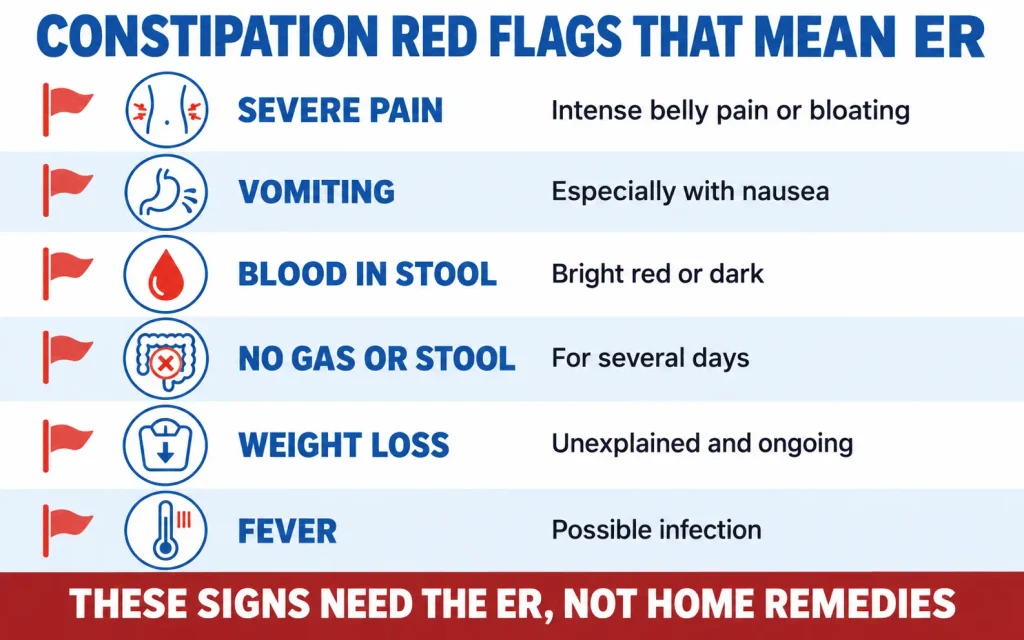
Most mild constipation resolves with water, fiber, or over the counter laxatives. But if you’re dealing with severe constipation that won’t ease up, you need to know: when does constipation become an emergency? The answer is simple, watch for clear warning signs. Ignoring them can be dangerous. That’s why knowing when to visit the ER for constipation is essential. If home remedies fail and symptoms intensify, look for these red flags. Recognizing these constipation danger signs early could save you from serious complications:
Severe Abdominal Pain or Bloating
If you experience severe, persistent abdominal pain that doesn’t subside, or intense bloating that prevents you from feeling comfortable, it’s time to seek immediate medical attention. This could be a sign of a bowel obstruction or other complications requiring abdominal pain ER care.
Vomiting or Nausea
If you have nausea or vomiting, especially when it is associated with constipation, it may indicate a serious condition like a bowel obstruction or a gastrointestinal issue. Vomiting fecal material or bile is a particularly concerning symptom that requires ER attention.
Blood in Stool
Finding blood in your stool can be a sign of several conditions, including hemorrhoids, anal fissures, or more serious conditions like gastrointestinal bleeding or diverticulitis. Whether the blood is bright red or dark and tarry, it’s essential to visit the ER immediately.
Inability to Pass Gas or Have a Bowel Movement
If you’re unable to pass gas or have a bowel movement for several days, this could indicate a more severe blockage, such as fecal impaction or a bowel obstruction, both of which require emergency care.
Unexplained Weight Loss
If you’re experiencing unexplained weight loss alongside constipation, this could be a sign of a serious underlying condition such as cancer or an endocrine disorder. Seek immediate medical attention to rule out any life-threatening causes.
Fever with Constipation
Fever is often a sign of infection, and if it accompanies constipation, it could indicate an infection in the gastrointestinal system, such as diverticulitis or appendicitis. In such cases, it’s important to go to the ER without delay.
Liquid Stool Leaking After Days of Constipation
Liquid or watery stool leaking after several days of constipation can sometimes mean stool is backed up in the rectum or colon, allowing softer stool to pass around the blockage. If this happens along with severe abdominal pain, swelling, vomiting, or worsening symptoms, seek prompt medical evaluation.
How Many Days Can You Go Without Pooping?
No one can say exactly how many days is “normal” for everyone. But if you don’t have a bowel movement for several days (particularly if that’s not your normal pattern) it could signify major constipation. If you haven’t had a bowel movement in 3 days and just keep getting uncomfortable, then it’s okay to ask for medical advice.
Seek immediate medical evaluation if you’ve been without a bowel movement for a week or if the constipation is associated with severe abdominal pain, major bloating, vomiting, bloody stool, fever or the inability to defecate or pass gas. Such symptoms may be a sign of constipation, but they may also be a sign of fecal impaction or a bowel obstruction.
It’s not all about the number of days. How you feel and whether you can pass stool or gas are important warning signs. Don’t keep taking home remedies if symptoms are becoming more severe rather than better unless you have medical guidance.
Potential Complications Requiring ER Visits
Certain conditions related to constipation can lead to serious complications that require prompt medical treatment. These include:
Fecal Impaction
A fecal impaction occurs when stool becomes hard and dry, and it becomes lodged in the rectum. This can cause severe pain and discomfort, and it may require manual removal by a healthcare professional. Our Constipation emergency care team can provide safe and effective treatment for this condition.
Bowel Obstruction
A bowel obstruction is a blockage in the intestines that prevents the passage of stool and gas. Symptoms include severe pain, bloating, and vomiting. If left untreated, a bowel obstruction can be life-threatening, requiring surgery to remove the blockage.
Appendicitis
Appendicitis occurs when the appendix becomes inflamed and can cause symptoms that mimic constipation, such as abdominal pain, bloating, and nausea. However, appendicitis is a medical emergency and requires immediate treatment, usually in the form of surgery.
Diverticulitis
Diverticulitis is the inflammation of small pouches (diverticula) that form in the colon. It can cause pain, bloating, and changes in bowel habits, including constipation. If the infection is severe, it may lead to perforation of the colon and requires urgent medical care.
Strangulated Hernia
In some cases, a hernia can become strangulated, cutting off blood flow to the intestines. This can result in severe pain, nausea, and constipation, and it requires emergency surgery to repair.
Constipation That Is Not Really Constipation
| Group | Looks like | May actually be | Red flag |
| Frail or older adults | New diarrhea | Liquid stool leaking around a hard impaction, called overflow constipation | Diarrhea in someone who was constipated last week |
| Newborns and infants | Straining, no stool | Hirschsprung disease, twisted bowel, infant botulism | No first stool in 48 hours, green vomit, weak cry, floppy tone |
| Spinal cord injury or MS | Routine constipation | A blood pressure emergency triggered by impaction | Pounding headache, sudden blood pressure spike, flushing, sweating |
| Previous abdominal surgery | Constipation with cramping | Scar tissue blockage | Vomiting plus no gas passing |
| Cancer patients | Constipation on chemotherapy | Nerve injury, tumor blockage, pressure on the spinal cord | New back pain, leg weakness, bladder changes |
| Pregnancy | Expected pregnancy constipation | Blockage or appendicitis, which present atypically | Severe pain, vomiting, fever, bleeding |
What Does the ER Do for Constipation or Fecal Impaction?
If the constipation is severe or the symptoms indicate a blockage or fecal impaction, the ER first tries to determine the cause and severity of the issue. This could involve a physical exam and/or imaging or testing if needed to see if there is an obstruction or another serious condition.
Treatment depends on the cause of the disorder. If a fecal impaction is present, a health care provider may recommend treatment with an enema, medication or manual removal of the hardened stool (if applicable). If the results of the tests indicate a bowel obstruction or other emergency situation, treatment will be aimed at resolving that problem.
The aim of constipation emergency care is not just to get you to poop. The aim is to find out the cause of constipation and to ensure that some more serious underlying condition is not being overlooked.
Severe pain, repeated vomiting, heavy abdominal bloating, blood in the stool, fever and not being able to pass gas are signs of a possible obstruction and should be treated as an emergency medical condition, not something to be treated at home.
How the ER Treats a Bowel Blockage and Stercoral Colitis
The order things happen
Vital signs
Fast heart rate, fever or low blood pressure move you to the front of the line.
Examination
Pain far worse than the exam suggests points to a blood supply problem.
Blood work
Lactate, blood counts, kidney function, potassium, calcium, thyroid when indicated.
Imaging
Xray is a quick screen. CT with contrast answers the question.
Treatment
Clearing stool begins only after a blockage is ruled out.
How a blockage is actually treated
A partial blockage is often managed without surgery. Nothing by mouth, fluids through a vein, and a tube through the nose to decompress the bowel above the blockage. Many settle within a day or two. Surgery is needed when the bowel is fully blocked, twisted, losing blood supply, or has already torn.
Stercoral colitis
A hardened stool mass presses on the colon wall long enough to cut off its blood supply. Risk rises with age, immobility, opioid use and years of laxative use. It gets missed because the complaint sounds ordinary. It is managed as a surgical problem, not with an enema. Untreated, a tear releases bowel contents into the abdomen and causes sepsis, which is the honest answer to whether constipation can turn life threatening.
Who is admitted and who goes home
Admission follows a confirmed blockage, colon wall injury, a tear, poor blood supply, vomiting that will not stop, or stool that could not be cleared. Discharge follows a clear scan, controlled symptoms and a plan.
The part that prevents a return visit
The most common reason people are back within a week is being cleared out with no maintenance plan. A complete plan includes an ongoing bowel regimen, specific reasons to return, follow up within two to three days, and a decision about the medication that caused the problem. The team at Top Care ER builds that into every discharge.
Medications That Cause Constipation
| Drug | How it slows the bowel | What helps |
| Mounjaro, Ozempic and similar | Delay stomach emptying and slow transit | Slower dose increases, osmotic laxative, provider review |
| Opioid pain medication | Stops the forward movement of the bowel | Stimulant laxative started the same day as the opioid |
| Anticholinergics such as oxybutynin, Benadryl, amitriptyline | Block the nerve signals that drive movement | Reduce the total load with your provider |
| Ondansetron for nausea | Blocks receptors that regulate colon transit | Short courses only |
| Verapamil, clonidine | Relax intestinal muscle | Ask about alternatives |
| Iron supplements, aluminum antacids | Harden stool | Change formulation or timing |
| Clozapine and other antipsychotics | Strong slowing effect that can stop the bowel entirely | Urgent evaluation if the abdomen swells |
Constipation Relief: What to Do When You Can’t Poop
If constipation occurs without warning signs, some simple measures may help. Regular bowel movements can be maintained by drinking plenty of fluids, slowly introducing more fiber into foods, being physically active and, when there is a need to pass stool, going and responding to the urge.
When feeling the urge to defecate, but not able to, do not strain or push violently to have a bowel movement. Straining can aggravate discomfort and may lead to conditions like hemorrhoids or anal fissures.
Some people take stool softeners or laxatives without a prescription from their pharmacist for occasional constipation. But these products aren’t suitable for all situations. Do not repeatedly take laxatives for severe, persistent or painful constipation, abdominal swelling, vomiting or when not passing gas, seek medical evaluation.
If home remedies aren’t working and you have severe constipation relief concerns, your healthcare provider can help you identify if you suffer from simple constipation, fecal impaction or an underlying condition that does.
Suppositories, Laxatives, Miralax, Dulcolax and Magnesium Citrate
There are several different types of over-the-counter constipation medications, such as laxatives, stool softeners and suppositories. The products act in different ways, such as softening stool, stimulating bowel movements or attracting water to the bowel.
Some popular inquiries are Miralax, Dulcolax, glycerin suppositories, magnesium citrate and stool softeners. The time these products take to work can vary depending on the product and the individual.
A suppository should only be repeatedly used to treat symptoms that are getting worse and may be helpful if stool is hard to pass through the rectum. Similarly, overuse of laxatives won’t cure the problem and may produce side effects.
If you think you may have a bowel obstruction, have severe abdominal pain, vomiting, a lot of abdominal swelling and are unable to pass gas, do not rely on laxatives or suppositories to treat the problem at home. If these symptoms are present, it is important to get medical help as it may need emergency treatment.
Passing Gas but Not Pooping: Is It an Emergency?
Being able to pass gas is generally different from having a complete inability to pass gas and stool. However, passing gas does not automatically rule out more serious constipation or other bowel problems.
If you’re not moving your bowels for a couple of days and getting more uncomfortable, watch for other symptoms. Abdominal pain that increases in severity, vomiting that will not stop, if the abdomen is noticeably larger, fever, blood in the stool or a sudden loss of bowel movements should be regarded as warning signs.
For example, no bowel movement for 7 days should not simply be ignored, especially if this is not usual for you or home remedies are not doing the job. If constipation does not improve or becomes more severe, you should see a doctor.
If you can pass gas but can’t go to the toilet, seek advice from a health care provider. If you are unable to have a bowel movement or pass gas and are experiencing severe abdominal pain or swelling, go to the emergency room as it may be a bowel obstruction.
Preventing Constipation
The best way to manage constipation is through prevention. By making certain lifestyle changes, you can reduce your risk of developing constipation in the future. Here are some tips to keep your digestive system healthy:
- Increase fiber intake: Eat more fruits, vegetables, and whole grains to keep your digestive system moving.
- Stay hydrated: Drink plenty of water throughout the day to prevent dehydration, which can contribute to constipation.
- Exercise regularly: Physical activity helps stimulate bowel movements and improves overall digestive health.
- Don’t ignore the urge: Always respond to the urge to have a bowel movement, as holding it in can lead to constipation.
Conclusion
Constipation is often a manageable condition, but certain symptoms should not be ignored. If you’re experiencing severe pain, bloating, vomiting, blood in your stool, or other red flags, it’s essential to seek emergency care immediately. At Top Care Emergency Room in Houston Heights, we are ready to help with any urgent concerns related to constipation or other digestive issues. If you are in doubt, don’t hesitate to visit us, we’ll make sure you get the care you need.
